

A Comprehensive Buyer's Guide (2009–2022)
The Toyota LandCruiser Prado 150 Series has earned a strong reputation in Australia for its blend of off-road capability, family practicality, and long-distance comfort. Produced from 2009 to 2022, the 150 Series sits below the full-size LandCruiser 200/300 Series but offers much of the same ruggedness in a more manageable package. Whether you’re shopping for a weekday family hauler or a reliable rig for remote touring, the 150 Series Prado remains one of the top choices in the large SUV market.
Generations and Model Updates (2009–2022)
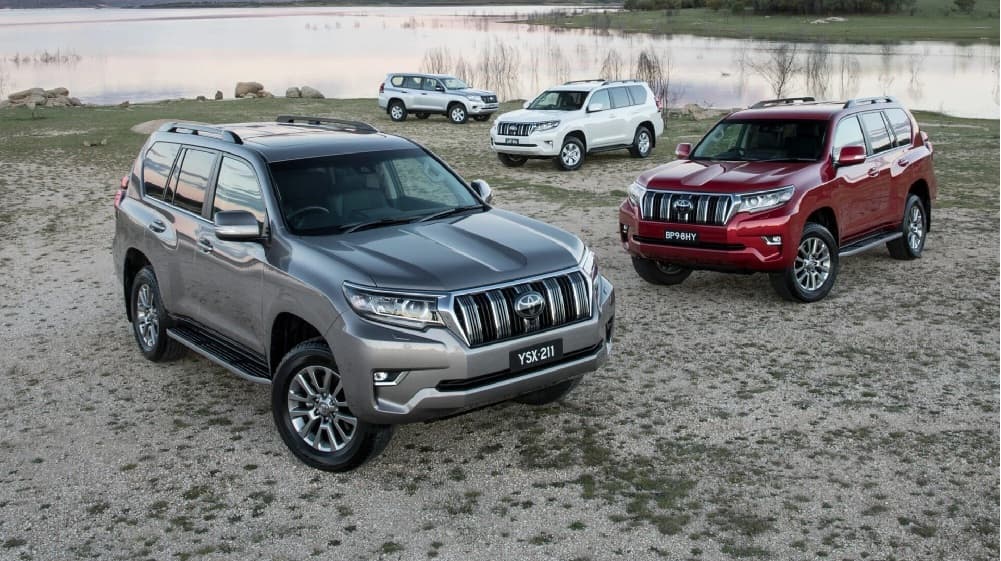
The Toyota LandCruiser Prado 150 Series was introduced to the Australian market in late 2009 as a replacement for the 120 Series Prado. It retained the key ingredients that had made the Prado so successful, a rugged body-on-frame construction, permanent four-wheel drive, and genuine off-road credentials, while stepping up interior comfort, safety, and overall refinement. Over its 13-year production run, the 150 Series underwent several significant updates that shaped its performance, reliability, and desirability on the used market.
Initial Release: 2009–2013
The launch of the 150 Series brought sleeker exterior styling, a redesigned dashboard, and new tech features like electronic traction control and hill descent assist. It was offered with a 3.0L turbo-diesel engine (1KD-FTV) and, in some variants, a 4.0L V6 petrol. Transmission choices included a 5-speed automatic or 6-speed manual, with most buyers opting for the auto due to its smoother on- and off-road performance.
First Facelift: 2013–2015
In 2013, Toyota gave the Prado a mid-cycle refresh with updated headlights (including LED daytime running lights on higher trims), a bolder grille, and revised front and rear bumpers. Inside, the centre console and infotainment controls were tweaked for better usability. Under the skin, Toyota refined the suspension setup for improved on-road manners without compromising off-road ability.
DPF Introduction and Emissions Compliance: 2015–2017
With the shift to stricter Euro 5 emissions standards, Toyota retired the 3.0L engine and introduced the new 2.8L turbo-diesel (1GD-FTV). This engine was paired with a diesel particulate filter (DPF), which brought better fuel efficiency and lower emissions but also added maintenance complexity. Buyers should be aware of DPF regeneration requirements, especially if they do mainly short city trips.
The 2.8L engine delivered 130kW and 450Nm in its initial form, offering solid performance for most tasks. However, many enthusiasts felt the power was modest, particularly when towing or fully loaded.
Major Update: 2017–2020
The 2017 refresh brought a more premium design language to the Prado. The front fascia was redesigned with a vertical grille, slimmer headlights, and a more sculpted bonnet. More importantly, the interior dashboard layout was completely revamped with a cleaner, more modern look, including larger infotainment displays and improved ergonomics.
Toyota also standardised more safety features across the range, and introduced active driver aids like lane departure alert and active cruise control on higher trims, particularly in VX and Kakadu grades.
Final Powertrain and Tech Upgrade: 2020–2022
From August 2020, Toyota increased the power output of the 2.8L diesel to 150kW and 500Nm, thanks to mechanical improvements and ECU recalibration. This was a turning point for many buyers who had previously felt the Prado was underpowered for towing or heavy touring. These later models also received a modern infotainment system with Apple CarPlay and Android Auto, finally addressing one of the most common complaints from earlier buyers.
Prado models from 2020 onwards are among the most desirable in the used market due to their increased power, better towing ability, improved fuel economy, and tech upgrades.
Engine Options and Performance
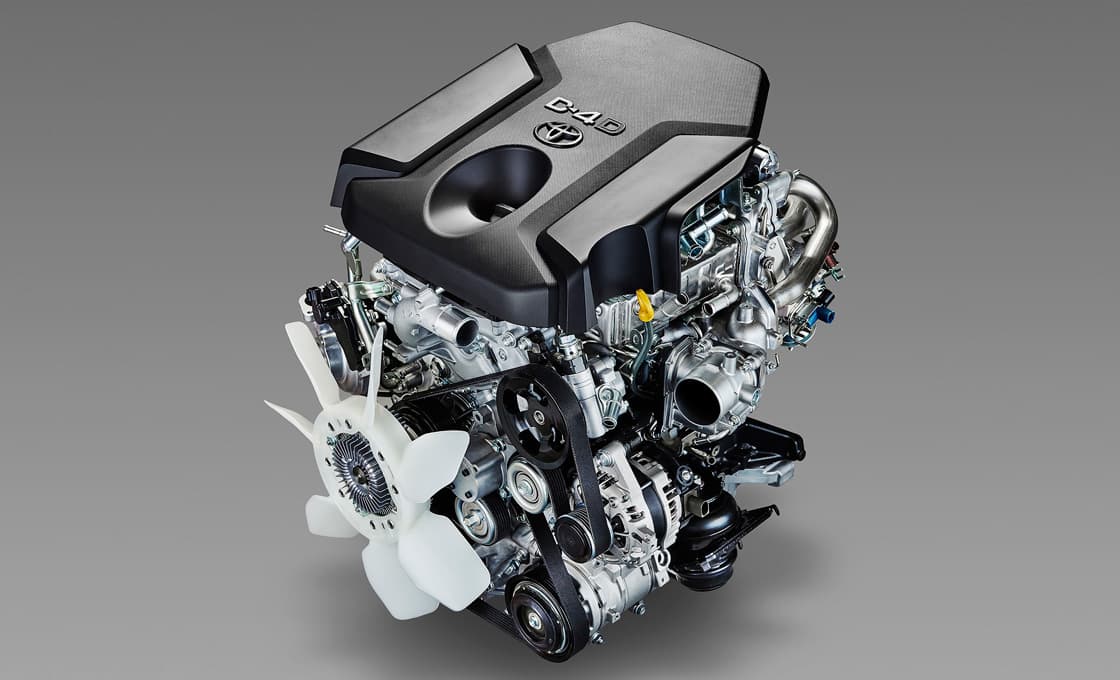
The LandCruiser Prado 150 Series was offered with a range of engines during its lifecycle, but the most popular and widely available option in Australia is the 4-cylinder turbo-diesel. These engines are favoured for their long-range fuel economy, towing torque, and proven durability in both urban and remote conditions.
3.0L Turbo-Diesel (1KD-FTV)
Available: 2009–2015
Power: 127kW
Torque: 410Nm
Transmission: 5-speed auto / 6-speed manual
Fuel Economy: 8.5–9.0L/100km
This engine was carried over from the previous 120 Series Prado and is well-regarded for its reliability and serviceability. It uses a timing belt that must be replaced every 150,000km, which is a key maintenance milestone for buyers to check.
While not especially powerful by today’s standards, the 3.0L engine delivers enough low-end torque for moderate towing and off-road work. However, later models with this engine were fitted with a diesel particulate filter (DPF) to meet Euro 5 compliance. This addition, while environmentally beneficial, introduced potential issues for drivers who mainly travel short distances and don’t allow the DPF to regenerate fully. Buyers considering a 2015 model should confirm the vehicle’s DPF health or regeneration history.
2.8L Turbo-Diesel (1GD-FTV)
Available: 2015–2022
Power (pre-2020): 130kW / 450Nm
Power (2020-onwards): 150kW / 500Nm
Transmission: 6-speed auto / 6-speed manual
Fuel Economy: 7.9–8.1L/100km
Toyota introduced the 2.8L turbo-diesel to replace the ageing 3.0L unit. It offered slightly improved fuel economy and more torque from lower in the rev range, making it more refined in daily driving. Early versions (2015–2019) are adequate performers, but the big leap came in mid-2020, when Toyota upgraded the engine to produce 150kW and 500Nm (in automatic versions). This was a major turning point for buyers who found previous models underpowered when towing or loaded up with passengers and gear.
The 2020+ models also feature better thermal efficiency, a revised turbocharger, and improved cooling — making them more suitable for Australian conditions, especially in hot, remote areas. For towing, touring, and long-distance road trips, this later 2.8L engine is the clear pick of the bunch.
DPF concerns were more prominent in early versions of this engine (2015–2018), with several class actions and complaints lodged. Toyota has since addressed many of these concerns with updated ECU software and revised driving instructions to encourage proper regeneration. Buyers should still verify that any earlier vehicle has received relevant software updates or has a clean DPF scan.
4.0L V6 Petrol
Available: Limited availability in early 150 Series models
Power: 202kW
Torque: 381Nm
Fuel Economy: 11.5–13.0L/100km
This engine was briefly available in GX and base GXL trims in the early years of the 150 Series but was eventually phased out due to low demand and poor fuel economy. While it delivers a smoother and quieter drive than the diesels, it lacks the torque needed for serious towing or off-road use, and high fuel consumption makes it costly for long-term ownership.
For most buyers, especially those focused on off-roading or touring, the petrol Prado doesn’t make sense, unless you’re after a budget buy for suburban use and the fuel economy isn’t a dealbreaker.
Trim Levels and Features
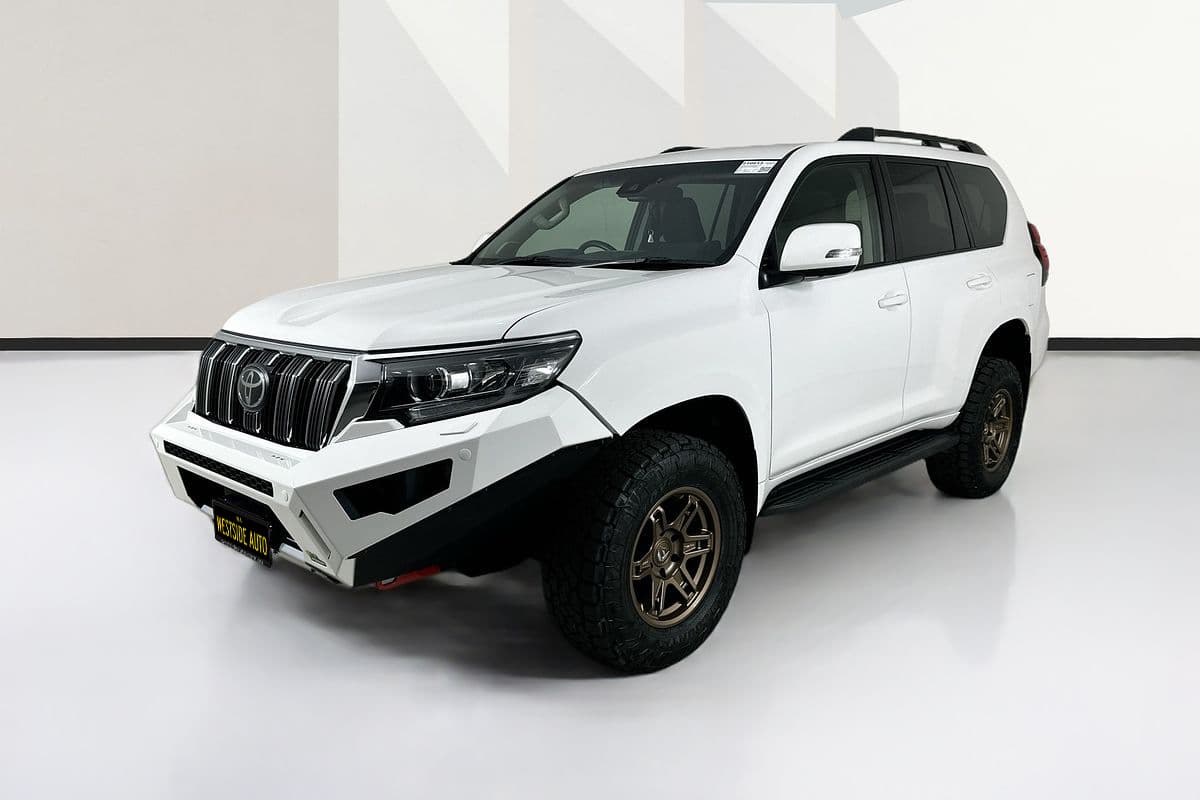
Across its 13-year run, the Toyota Prado 150 Series was offered in a range of trim levels to suit everything from commercial fleet use to luxury outback touring. Understanding the differences between these trims is essential when buying used, as features, safety inclusions, and even off-road capability can vary significantly from model to model.
Here’s a breakdown of the core trims offered in Australia:
GX –
The GX is the entry-level trim, aimed primarily at fleet buyers and off-road purists who value simplicity over creature comforts. Available in 5-seat or 7-seat configurations (depending on model year), the GX is mechanically identical to higher trims but lacks most luxury appointments.
Key features:
-
17-inch steel wheels
-
Manual air conditioning (early models)
-
Cloth seats
-
Rubber flooring in some years
-
Full-time 4WD with low range
-
No rear parking sensors or camera (pre-2018)
Who it suits:
Buyers looking for a blank canvas to build a touring or overlanding rig often favour the GX, as it’s lighter, less complex, and has fewer electronic systems to go wrong off-road. However, resale value is lower, and tech-savvy families may find it lacking in convenience.
GXL –
The GXL is the most popular trim in the used market and strikes a balance between rugged utility and family-friendly features. It typically includes 7 seats as standard and offers a substantial step up in comfort over the GX.
Key features:
-
17-inch alloy wheels (later 18-inch)
-
Dual-zone climate control
-
Roof rails and side steps
-
Reversing camera and rear parking sensors (from 2018)
-
Satellite navigation and touchscreen infotainment
-
Rear diff lock (added from 2018 onwards)
Notable variations:
From 2020 onwards, the GXL also gained Apple CarPlay/Android Auto, a big win for tech-savvy buyers. Rear parking sensors were also included as standard after 2018. A GXL Premium Interior Package was offered in some years, adding leather upholstery and powered front seats, desirable upgrades on the used market.
Who it suits:
Families, grey nomads, and tourers. The GXL offers the best value for most buyers, with strong resale and plenty of aftermarket compatibility.
VX –
The VX builds on the GXL with a range of premium features and upgraded safety tech, making it ideal for buyers wanting a refined long-distance 4WD SUV.
Key features:
-
18-inch alloy wheels
-
Leather-accented seats with heating and power adjustment
-
Premium 9-speaker audio system
-
Blind spot monitoring, rear cross-traffic alert (from 2017)
-
Lane departure warning and radar cruise (post-2020)
-
Bi-LED headlights and auto high-beam
Who it suits:
Buyers who plan to use their Prado as a primary family vehicle, especially for regular highway use, will appreciate the additional comfort and safety gear. VX models are also better insulated and quieter on the road, improving long-haul comfort.
What to watch for:
VX and Kakadu variants often fetch higher prices, so it’s important to ensure service history and condition align with the premium being asked.
Kakadu –
The Kakadu is the range-topping Prado, loaded with every available feature, and designed for buyers who want the ultimate in tech, luxury, and off-road versatility.
Key features:
-
Adaptive Variable Suspension (AVS)
-
Crawl Control and Multi-Terrain Select
-
Rear-seat entertainment system (roof-mounted DVD)
-
Moonroof
-
Powered tailgate
-
KDSS (Kinetic Dynamic Suspension System) on some years
Who it suits:
Touring families, off-road enthusiasts with a bigger budget, and buyers stepping down from a 200 Series will find the Kakadu compelling. It’s particularly attractive for those towing large caravans or planning remote travel, as the advanced traction systems can make a real difference in tough terrain.
What to note:
While the Kakadu is the most feature-rich Prado, it’s also the most complex, and that can mean higher repair costs if systems like AVS or KDSS fail outside of warranty. Some buyers prefer a VX with aftermarket suspension for this reason.
Off-Road and Towing Capability
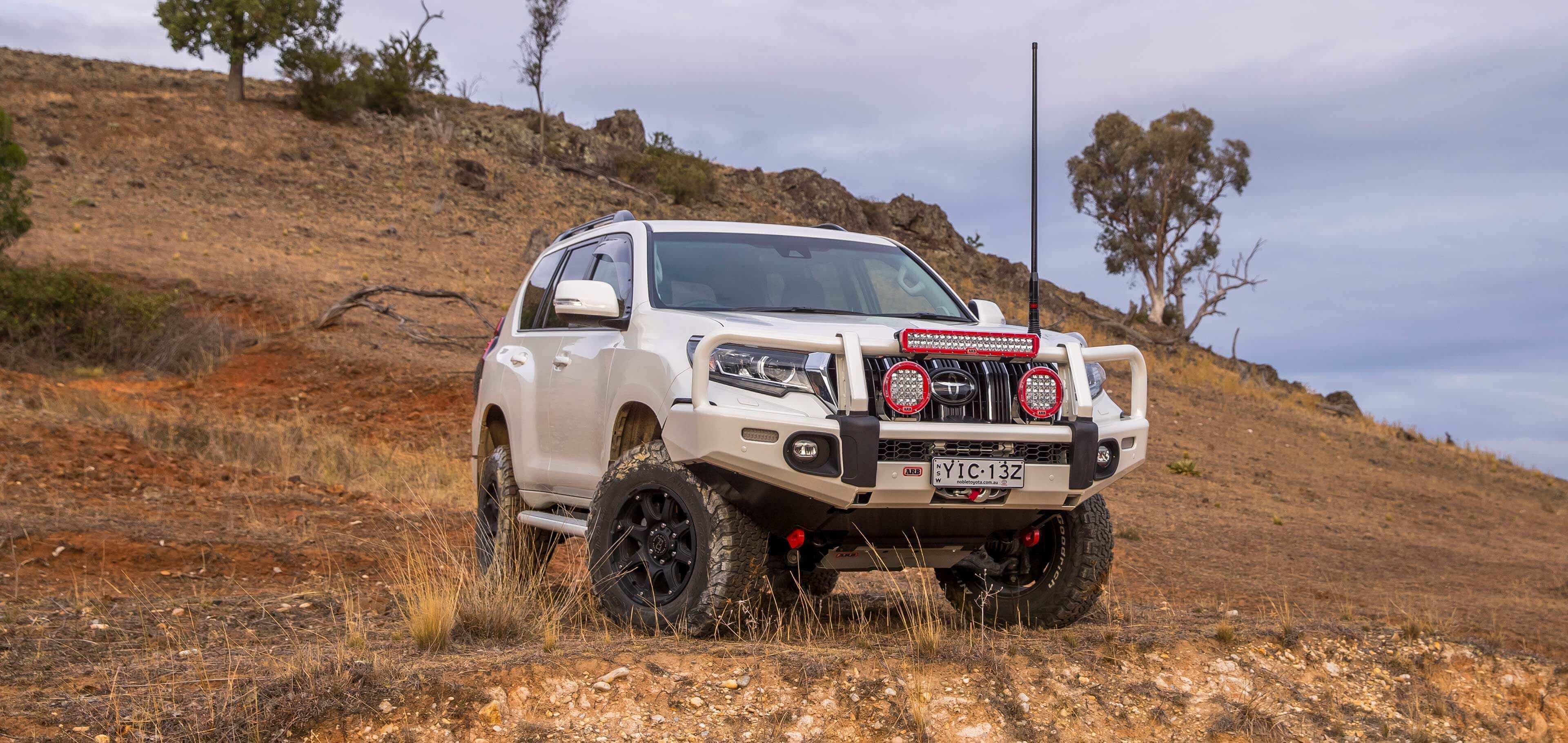
One of the Prado 150 Series’ greatest strengths is its ability to balance genuine off-road performance with on-road comfort. Whether you're tackling corrugated fire trails, towing a caravan across the Nullarbor, or navigating a muddy campsite, the Prado delivers capability and confidence. Importantly, Toyota made sure that even the lower trims could hold their own off the blacktop, while the higher-spec models introduced advanced features for serious off-roaders.
Off-Road Hardware: Built to Perform
All Prado 150 Series models share the same full-time 4WD system with a Torsen centre differential, high and low-range gearing, and a transfer case. Unlike many SUV rivals with part-time systems or electronic-only AWD, the Prado’s permanent 4WD layout ensures traction is available to all four wheels at all times, which is essential when traction drops suddenly on uneven surfaces.
Key off-road features include:
-
Centre differential lock (standard across all trims)
-
Low-range gearing
-
Rear differential lock (standard on GXL and above from 2018 onwards)
-
Hill descent control & hill start assist
-
Underbody protection plates
-
Impressive approach, departure and ramp-over angles
-
800mm wading depth
In stock form, the Prado is capable enough for most recreational off-roaders and weekend explorers. Suspension travel is generous, and the 2.8L diesel (especially post-2020) delivers enough low-end torque to crawl up steep climbs or through boggy terrain without strain.
Advanced Off-Road Systems (VX & Kakadu)
If you're shopping for a VX or Kakadu, you’ll benefit from additional off-road technology designed for serious touring:
-
Crawl Control (Kakadu only): Automatically modulates throttle and braking at low speeds to help navigate rock steps, sand, or mud without driver input.
-
Multi-Terrain Select (MTS): Tailors traction control to suit different surfaces (Mud, Rock, Sand, etc).
-
KDSS (Kinetic Dynamic Suspension System): Available in early Kakadu models, this allows greater wheel articulation by decoupling sway bars off-road, while retaining flat handling on-road.
-
Adaptive Variable Suspension (AVS): Electronically adjusts shock absorber firmness in real time to suit changing conditions.
Buyers interested in remote touring, especially in soft sand or rocky regions, will appreciate these features, although they do introduce extra complexity and potential servicing costs down the track.
Towing Capacity: What You Need to Know
The Prado 150 Series has long been a favourite among caravan and camper trailer owners, and for good reason. Depending on year and specification, towing capacity ranges from 2,500kg to 3,000kg braked.
-
Pre-2018 models: Typically rated to 2,500kg, though real-world performance was limited by modest torque (especially in 3.0L models).
-
2018–2020 models: Rated to 3,000kg braked, but the engines output was often considered underwhelming with heavy loads.
-
2020–2022 models: Still rated at 3,000kg braked, but the upgraded power made a noticeable difference in towing confidence and overtaking ability, especially with an automatic transmission.
Other helpful towing features include:
-
Trailer sway control
-
Rear-view camera (standard GXL and up)
-
Ample torque at low RPM
-
Long wheelbase and solid rear axle for stability
Important consideration:
Maximum towing capacity assumes minimal payload, and if you’re towing close to 3 tonnes with a full family and gear onboard, you may exceed the Gross Combined Mass (GCM). Many owners choose to install aftermarket towing upgrades, airbag rear suspension supports, or electronic brake controllers for added control.
Interior Comfort and Practicality
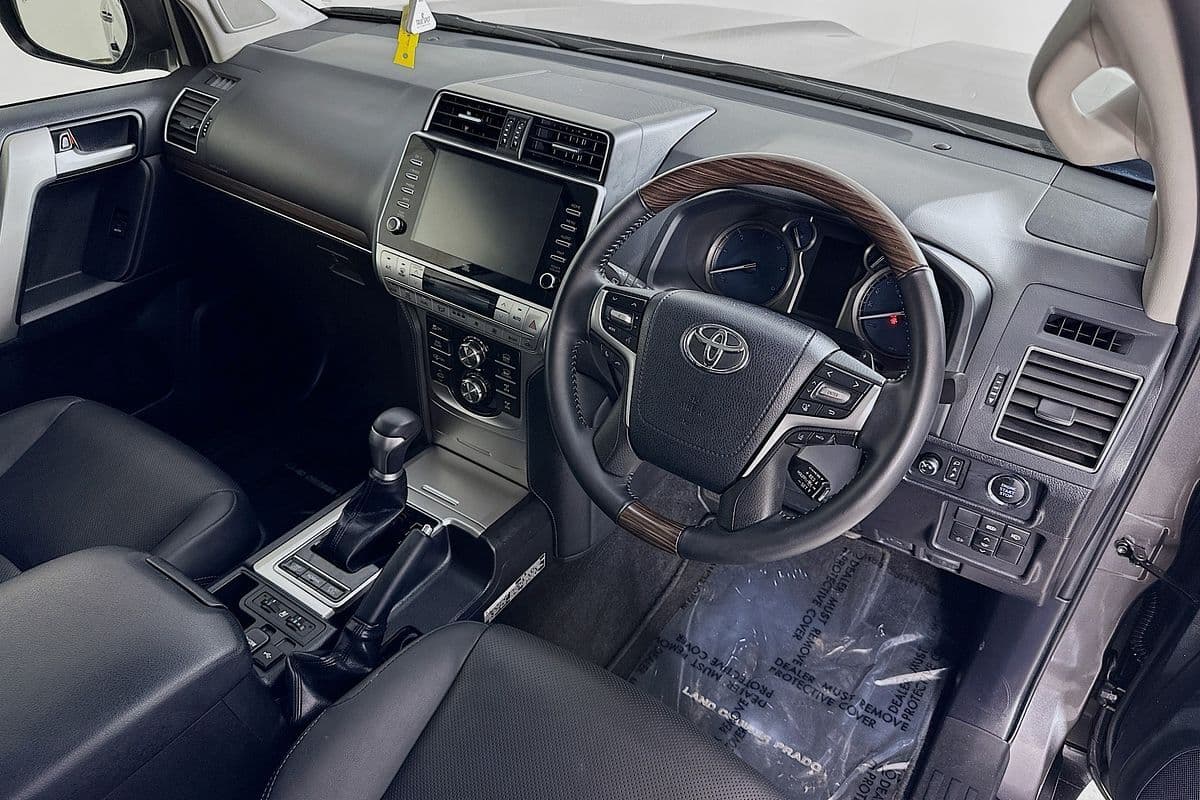
While the Prado 150 Series has always been built on rugged underpinnings, Toyota took major steps to ensure the interior lived up to family and long-distance touring expectations. Across its lifecycle, the Prado evolved from a utilitarian SUV into a more refined, tech-savvy, and comfortable space, without sacrificing the practicality it’s known for.
For buyers comparing models, knowing how the interior experience changes across different trims and years can make a big difference in choosing the right Prado for your needs.
Infotainment and Technology
Technology in the 150 Series evolved slowly. Early models (2009–2014) had basic touchscreens with built-in sat nav, but no smartphone integration and very limited media support.
-
2013–2017: Touchscreen upgraded, but still lacks Apple CarPlay or Android Auto.
-
2017 facelift: Larger 8-inch screens introduced on most trims, better audio quality, and improved user interface.
-
2020 update: Apple CarPlay and Android Auto finally introduced, along with improved resolution and voice control integration.
Buyer tip: If smartphone integration is important, look for a 2020+ model or factor in the cost of an aftermarket head unit upgrade (common among earlier GXL and VX owners).
Other notable features depending on trim:
-
Premium 9-speaker JBL audio system (VX/Kakadu)
-
Rear-seat DVD entertainment system (Kakadu only)
-
Wireless phone charging (not available)
-
Rear-view camera (standard GXL+)
-
Smart key entry and push-button start (GXL+)
Known Issues and Maintenance Tips
The Toyota Prado 150 Series has a reputation for durability, but like any vehicle, especially one commonly used for towing and off-road travel, it does have its share of known issues. The key for buyers is knowing what to look out for, understanding which issues are common to specific year ranges, and ensuring a proper maintenance history is in place.
Here’s a breakdown of the most important things to consider before purchasing a used 150 Series Prado.
1. Diesel Particulate Filter (DPF) Problems – 2015 to 2018
The introduction of the 2.8L turbo-diesel engine in 2015 came with the addition of a diesel particulate filter (DPF) to meet Euro 5 emissions standards. While this technology is common in modern diesels, early versions of Toyota’s DPF system caused issues for drivers who mostly did short, urban trips.
Symptoms include:
-
Poor fuel economy
-
Excessive exhaust smoke
-
Warning lights on the dash
-
Power loss or limp mode
Toyota issued software updates and later mechanical revisions to improve automatic DPF regeneration and reduce build-up. From late 2018 onward, most of these issues were resolved.
Buyer tip:
-
For 2015–2018 models, check if the DPF burn history has been recorded.
-
Ask if the vehicle received the ECU reflash and DPF warranty extension Toyota rolled out.
-
Highway driving habits help mitigate this issue, so ask how the previous owner used the car.
2. Steering Shaft Knock
Some owners report a knocking or clicking sound in the steering column, particularly when turning at low speeds or on uneven surfaces. This is usually caused by wear in the intermediate steering shaft.
It’s not dangerous but can be annoying and may fail a roadworthy in some cases.
Solution:
-
Replacement parts are readily available
-
Repairs can cost between $400–$800 depending on whether genuine or aftermarket parts are used
3. Brake Booster Issues – Early Models (2009–2012)
A small number of early 150 Series Prados experienced issues with the brake booster or master cylinder, which could lead to reduced braking assistance.
Symptoms:
-
Spongy or hard brake pedal
-
Unusual hissing sound when pressing the brake
This issue is far less common on later models, and Toyota addressed it in updated components from 2012 onwards.
4. Suspension Wear from Heavy Loads or Off-Roading
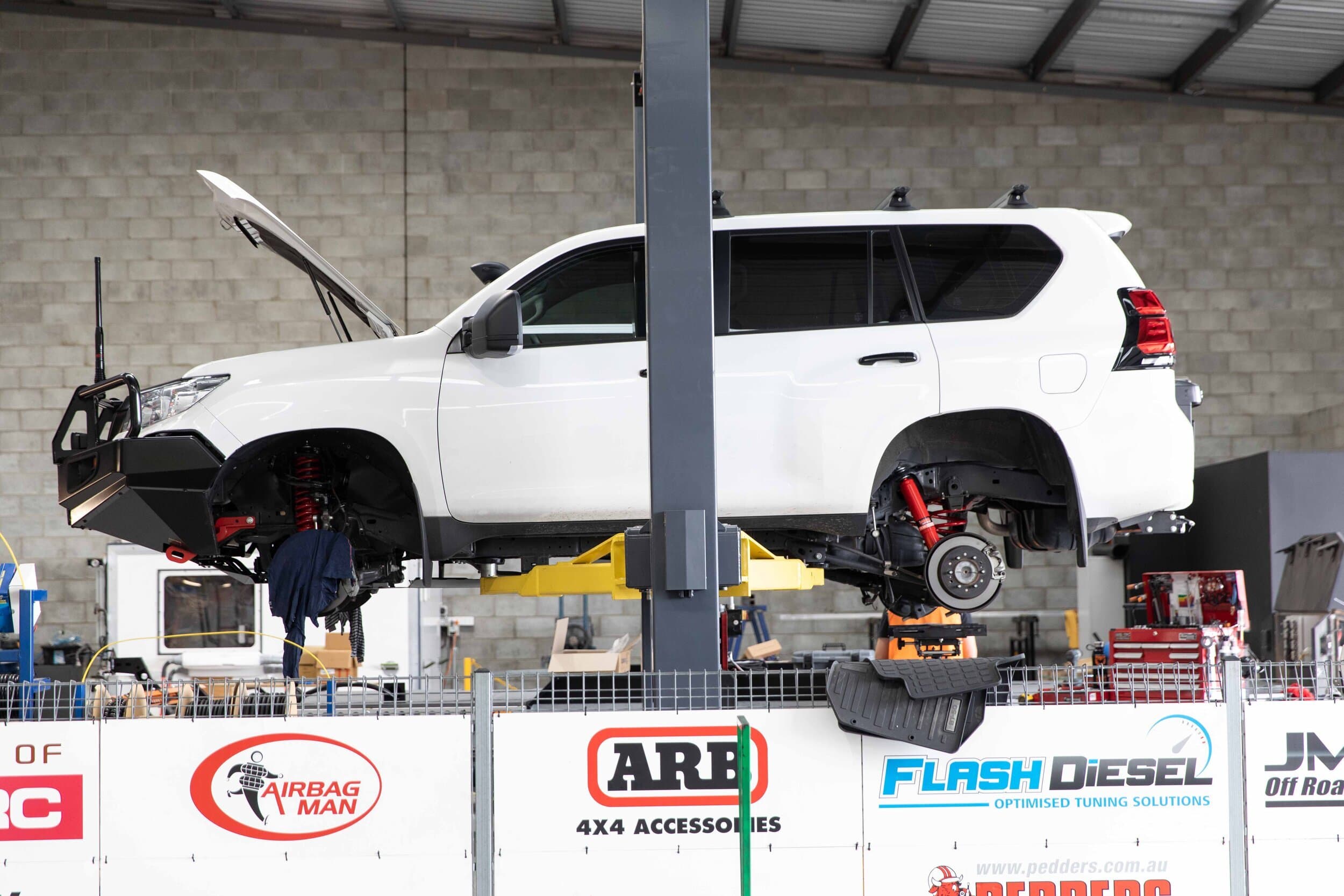
The Prado’s suspension is built for tough conditions, but high-kilometre vehicles that have towed frequently or spent lots of time off-road can show signs of wear in:
-
Lower control arms
-
Bushings
-
Shock absorbers
-
Sway bar links
Buyer tip:
-
Check for uneven tyre wear or clunking sounds over bumps
-
Ask about recent suspension servicing, especially if a lift kit or airbag helper springs were installed
5. EGR System Build-Up
Like many modern turbo-diesels, the Prado’s exhaust gas recirculation (EGR) system is prone to carbon build-up over time. This can restrict airflow and reduce performance or fuel economy.
Preventative steps:
-
Regular servicing with high-quality oil
-
EGR/intake cleaning every 80,000–100,000km
-
Consider using catch cans (not factory approved, but common among enthusiasts)
The Prado 150 Series rewards proactive owners. If you’re buying used, focus on vehicles with full Toyota or specialist 4WD service history, ideally with receipts. Don’t be put off by higher mileage if the vehicle has been well cared for, these engines and drivetrains are built for the long haul.
If you need to book a service or repairs for your Prado - You Can Book Here
Resale Value and Market Position
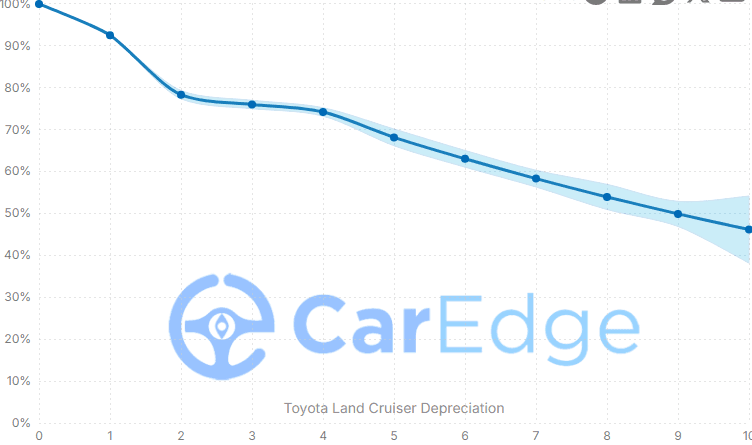
The Toyota LandCruiser Prado 150 Series holds its value better than almost any other large SUV in Australia. Its reputation for reliability, strong brand loyalty, and genuine off-road credibility means demand stays high, even for older or higher-kilometre examples. For buyers, this has two implications: you’re likely to pay more for a used Prado than for a comparable rival, but you’ll also retain much more of your investment when it comes time to sell.
How Well Does the Prado Hold Its Value?
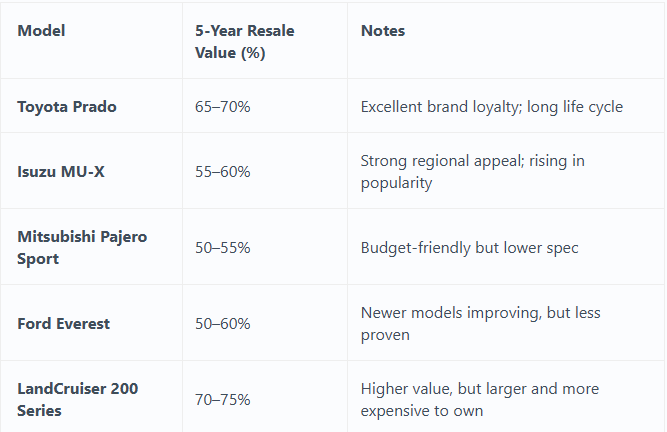
Independent data sources like RedBook and Glass’s Guide consistently rank the Prado among the top performers in depreciation. After five years, the Prado 150 Series often retains 60–70% of its original value, depending on trim, condition, and kilometres. By comparison, many other SUVs dip well below 50% in the same period.
Some key patterns in the resale market include:
-
VX and Kakadu models tend to retain value best, thanks to their premium features and demand among remote travellers.
-
GXL models dominate the used market and are highly sought after due to their balance of price and spec.
-
GX models may depreciate faster unless modified for 4WD use (e.g. mining, fleet, or touring setups).
Later models (particularly 2020–2022) with the 150kW engine and smartphone integration are in extremely high demand, often commanding prices only marginally below new equivalents, especially during periods of supply shortages.
Prado vs Competitors: Where It Stands
Here’s how the Prado stacks up in terms of resale and buyer demand compared to its peers:
Want to sell your 150 series Prado? - Get a valuation today
Final Verdict: Is the Prado 150 Series Worth Buying?
If you’re in the market for a large SUV that can confidently handle school runs, cross-country touring, and genuine off-road exploration, the Toyota LandCruiser Prado 150 Series remains one of the most versatile and dependable choices in Australia’s used car market.
What sets the Prado apart is its ability crawl up fire trails one day and pull into a resort carpark the next without missing a beat. The 150 Series delivers peace of mind through Toyota’s proven engineering, widespread parts availability, and strong resale value, a combination few rivals can match.
Which Years and Trims Offer the Best Value?
-
Best all-rounder:
2020–2022 GXL — Offers the upgraded 150kW engine, modern infotainment, Apple CarPlay/Android Auto, and strong towing ability without the premium of higher trims. -
Best for luxury touring:
VX or Kakadu — Ideal for those who want the full suite of comfort and tech features, including safety aids, premium audio, and off-road tech like Crawl Control. -
Best budget buy:
2013–2015 GXL or VX — Earlier models with fewer electronics, solid 3.0L engine, and good bang-for-buck for buyers not needing the latest tech.
What to Look Out For
-
Prioritise vehicles with full-service history (especially timing belt and DPF updates)
-
Be wary of heavily modified or ex-fleet units unless reconditioned
-
Inspect for suspension wear and ensure proper DPF function on 2.8L models
In Summary
The Toyota Prado 150 Series has earned its place as a go-to SUV for Australian conditions, and for good reason. It offers long-distance comfort, family-friendly design, real off-road ability, and Toyota’s unmatched reputation for reliability.
Whether you’re upgrading from a soft-roader or downsizing from a LandCruiser 200, the Prado 150 Series gives you a capable, comfortable, and confidence-inspiring drive. With careful shopping and informed inspection, it’s a vehicle that will serve you for years, if not decades, to come.
Looking to make the move? Check our latest Prado stock and book a test drive today.