

The Toyota Fortuner has grown from a rugged utility-based SUV into a respected global nameplate that delivers genuine capability, strong performance, family practicality, and long-term durability. Across markets like Australia, Southeast Asia, Africa, and the Middle East, the Fortuner has earned a loyal following because it meets the needs of real drivers. It performs without drama, lasts without fuss, and adapts to the lifestyle of its owner with ease.
This is not a simple story of yearly facelifts or incremental trims. It is a detailed evolution shaped by engineering discipline, market insight, and a long-standing philosophy of continuous improvement. To understand why the Toyota Fortuner has become one of the most dependable and versatile large SUVs in the world, we need to trace its journey from concept to creation, then from its earliest framework to the refined model we know today.
This extensive guide breaks down every chapter of the Fortuner’s evolution. It examines its origins, design strategy, engine development, performance credentials, safety systems, towing capability, off road functions, cabin comfort, technology updates, market behaviour, future direction, and the engineering principles that shaped it. Whether you are a current owner, a potential buyer, or someone curious about how Toyota refined a Hilux-based SUV into a world-class model, this article aims to give you everything you need to know.
Chapter One. The Beginning. How the Fortuner Concept Took Shape
A Global Need for a Versatile Seven Seat SUV
In the early 2000s, Toyota identified a clear need in developing markets. Families wanted an SUV that could carry seven people, handle rough conditions, and remain affordable to buy and maintain. Many of the SUVs available at the time were either too expensive, too soft for harsh roads, or too small for larger families.
Toyota had the perfect foundation for such a model. The Hilux was already known worldwide as one of the toughest work vehicles available. It had a robust ladder frame, tried-and-tested diesel engines, and a reputation for durability that other brands struggled to match.
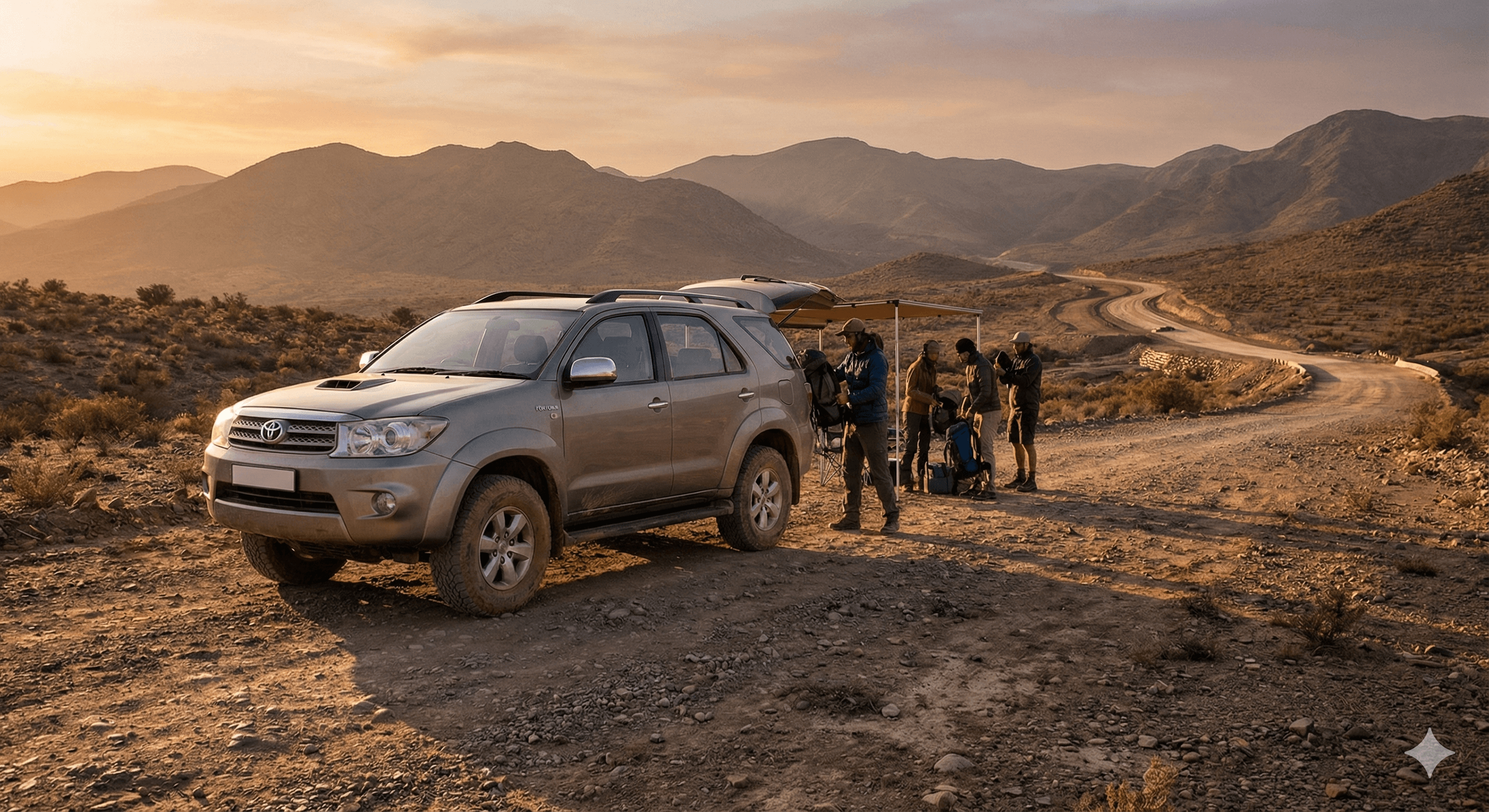
By adapting proven Hilux engineering into a family-focused SUV, Toyota saw an opportunity. The concept was simple. Create a vehicle that could:
- handle unsealed roads
- withstand heavy use
- be affordable for emerging markets
- carry seven passengers
- tow with confidence
- remain reliable for many years
- deliver comfort and practicality
This idea formed the basis of the Innovative International Multi-purpose Vehicle program, which would eventually produce the Hilux, the Innova, and the first-generation Fortuner.
The First Generation Fortuner. Built for Strength and Function
The original Fortuner made its global debut in 2004. It was immediately recognised for its bold stance, strong proportions, and purposeful design. Although Toyota meant it for markets outside Japan and North America, the vehicle quickly exceeded expectations.
The recipe worked perfectly.
Shared Hilux Platform. Real Off Road Strength
Toyota used the Hilux chassis as the backbone of the Fortuner for several reasons.
- The ladder frame construction offered durability and strength.
- Independent front suspension and coil sprung rear suspension provided a balance of stability and comfort.
- The platform could withstand heavy loading, rough terrain, and long term wear.
- It allowed for cost-effective production and affordable ownership.
By sharing core underpinnings with the Hilux, the Fortuner gained the rugged behaviour of a pickup while still offering the enclosed comfort of an SUV.
Engine Options for a Global Audience
Market needs varied drastically across regions, so Toyota offered several engine choices.
Common options included:
- 2.7 litre petrol VVT-i
- 4.0 litre V6 petrol
- 2.5 litre diesel
- 3.0 litre D4D diesel
The diesel models quickly became the favourite in markets like Australia and Southeast Asia because they offered strong low-end torque, good fuel economy, and reliable performance under load.
Interior Layout. Purpose First
The first-generation cabin was not luxurious, but it was well planned. Toyota prioritised:
- a practical dashboard
- large controls for easy use
- durable materials
- simple maintenance
- seven seat capacity
- folding third-row seats (side mounted in early models)
Families, businesses, and government fleets found it ideal. It was tough, straightforward, and fit for purpose.
Facelifts and Progressive Refinements
Toyota refreshed the first-generation Fortuner in 2008 and again in 2011. These updates enhanced styling, technology, comfort, and safety. Even though the first-generation model remained fundamentally similar, each update delivered noticeable improvements. Buyers appreciated that Toyota invested in its longevity instead of letting it stagnate.
Strengths That Defined the First Generation
Owners valued the original Fortuner for:
- durability
- reliability
- strong diesel performance
- off road capability
- family practicality
- low ownership costs
Its weaknesses were mostly comfort related. On road ride quality could feel firm, and the third row design reduced cargo flexibility. Still, the Fortuner dominated markets because it delivered what mattered most to real drivers.
Chapter Two. The Second Generation Arrives and Reinvents the Fortuner
In 2015, Toyota introduced the second-generation Fortuner. This was not just a visual update. It was a complete reinvention.
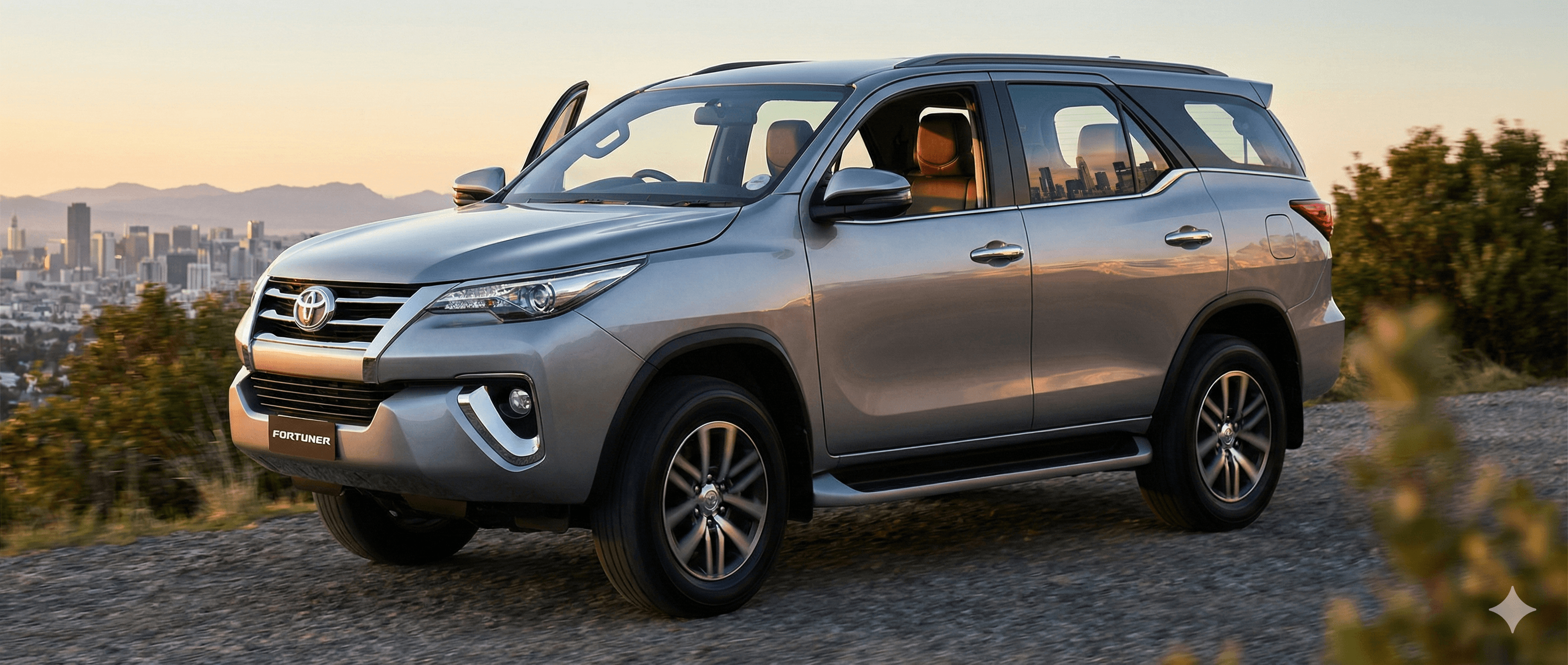
A Brand New Look Guided by Toyota’s Modern Design Philosophy
The second-generation model showcased:
- slimmer headlights
- a more sculpted body
- a refined front grille
- sleek chrome accents
- a floating roof effect through blacked out pillars
- upgraded LED light clusters
The new design signalled a major shift. Toyota was transforming the Fortuner into a more refined SUV while keeping its rugged identity intact.
A Modernised Interior with Elevated Comfort
The cabin received a full overhaul. Toyota moved away from the original basic and robust layout and adopted a more premium feel. Key improvements included:
- a redesigned dashboard
- better materials
- improved seating comfort
- a modern centre display
- enhanced sound insulation
- better third row access
- increased storage options
The cabin finally felt like a comfortable long-distance vehicle rather than a converted pickup.
New GD Series Turbo Diesel Engines
The most important mechanical improvement was the introduction of the GD series diesel engines. The standout was the 2.8 litre turbo diesel. It offered:
- increased power
- stronger torque
- better cooling
- lower emissions
- enhanced fuel efficiency
- quieter operation
In markets like Australia, this engine quickly became the default choice.
Six Speed Automatic Transmission with Driving Modes
The six speed automatic improved acceleration and cruising comfort. Eco and Power modes allowed the driver to tailor performance based on needs.
- Eco Mode softened throttle response and aimed for maximum efficiency.
- Power Mode sharpened acceleration and allowed the driver to extract stronger performance.
This flexibility made the SUV more enjoyable in diverse driving situations.
Enhanced Off Road Technology
The Fortuner gained improved off road systems such as:
- active traction control
- downhill assist control
- selectable four-wheel drive
- locking rear differential in some grades
- improved approach and departure angles
These features allowed the SUV to stay competitive with other off road capable models.
Safety Technology Becomes a Core Focus
The second-generation Fortuner was engineered with modern safety expectations in mind. Toyota included:
- vehicle stability control
- trailer sway control
- anti-lock braking
- seven airbags
- improved body structure
Later updates added Toyota Safety Sense in several markets, which included:
- pre collision systems
- lane departure alert
- adaptive cruise control
- road sign assist
The transformation was dramatic. The Fortuner became a legitimate alternative to more expensive SUVs.
Chapter Three. The 2020 and 2021 Updates Strengthen the Fortuner Further
The Fortuner’s mid cycle update introduced significant performance improvements and cosmetic enhancements.
Power Upgrade to the 2.8 Litre Diesel
Torque rose to 500 Nm in automatic models, dramatically improving:
- towing strength
- overtaking performance
- off road climbing ability
- city driving responsiveness
- long distance touring confidence
Power increased to 150 kW, placing the Fortuner among the most capable SUVs in its class.
Fuel Efficiency Improves Despite More Power
Toyota refined fuel injection pressure, turbocharger efficiency, internal cooling, and emissions systems. These improvements allowed the engine to become more powerful yet more efficient.
In some trims, official consumption reached as low as 7.6 litres per 100 kilometres.
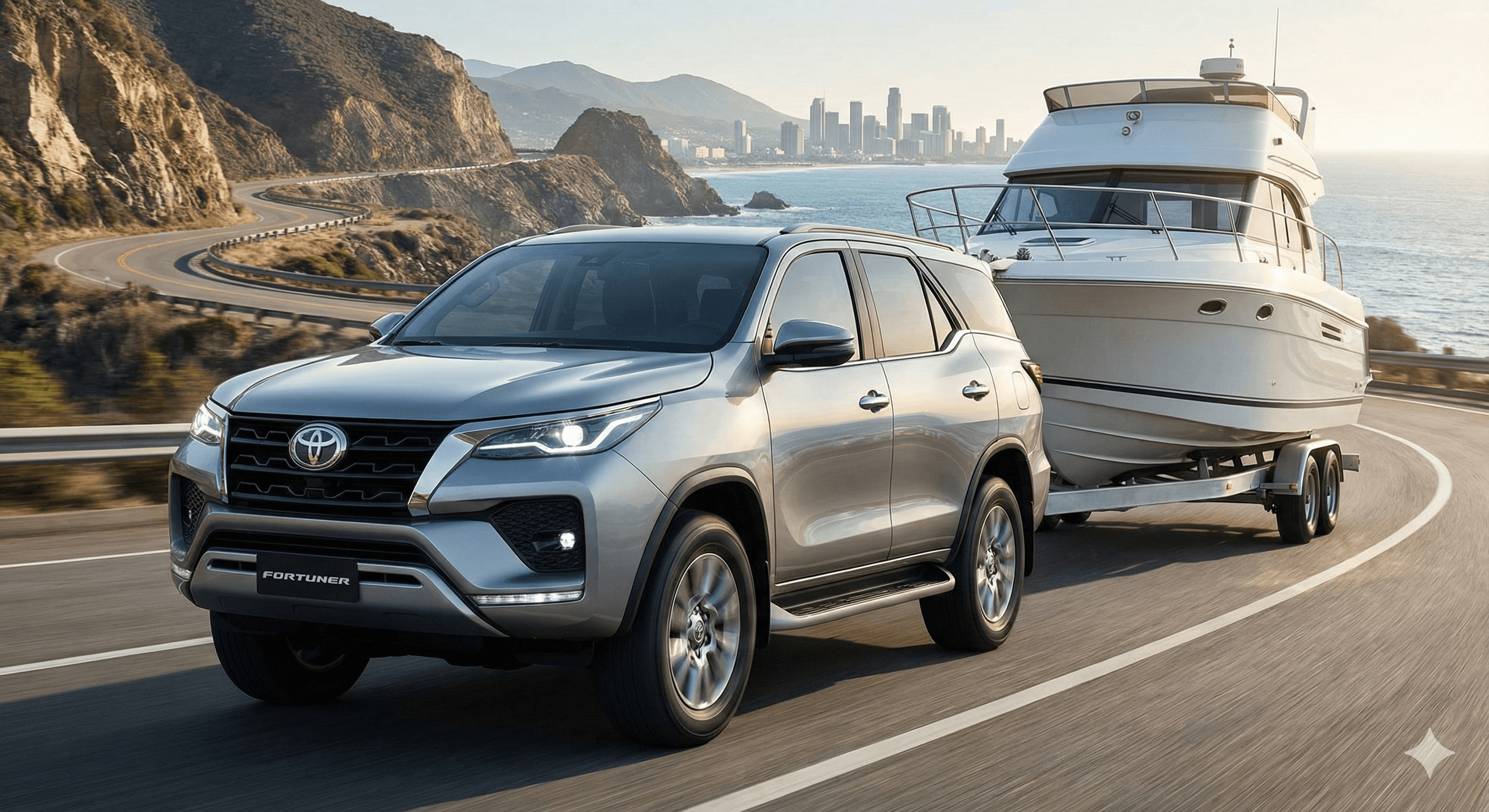
Towing Strength Rises to 3100 kg
The Fortuner became a legitimate towing vehicle. Owners could confidently tow:
- caravans
- boats
- horse floats
- trailers
- work equipment
This upgrade expanded the SUV’s usefulness for Australian buyers who routinely tow heavy loads for camping, touring, boating, and off-road adventures.
Infotainment and Tech Modernisation
The infotainment system received major enhancements:
- larger touchscreen
- Apple CarPlay
- Android Auto
- improved graphics
- clearer menus
- better audio performance
Connectivity finally matched modern expectations.
Exterior Enhancements and Premium Feel
Toyota sharpened styling through:
- redesigned front fascia
- fresh grille patterns
- modernised LED headlights
- new wheel designs
- updated taillights
The Fortuner looked contemporary and upscale, appealing to both urban families and off-road enthusiasts.
Chapter Four. Understanding the Engineering Principles That Shape the Fortuner
To appreciate how Toyota perfected the balance between power and purpose, it helps to look at the engineering philosophy behind the vehicle.
Kaizen. Continuous Improvement as a Core Principle
Kaizen involves making small, carefully measured improvements repeatedly over time. Instead of releasing a completely new model every few years, Toyota enhances existing systems.
This philosophy influenced:
- engine refinement
- interior ergonomics
- off road tuning
- safety integration
- fuel efficiency
- towing strength
- chassis rigidity
- noise reduction
The result is a stable platform that steadily becomes better without sudden, drastic changes that could affect long term dependability.
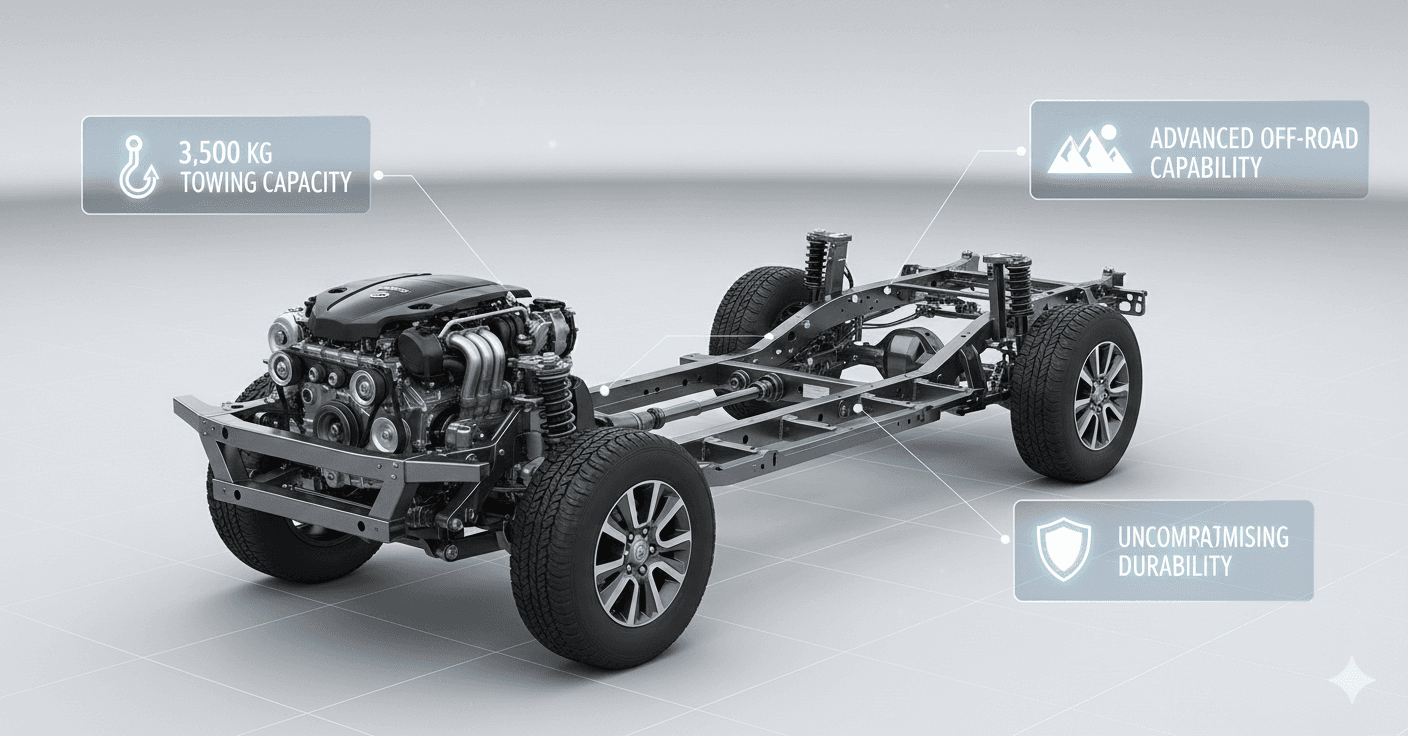
Why Body on Frame Construction Still Matters
Many modern SUVs use unibody construction. While that design improves on road comfort, it limits off road capability and reduces towing capacity. The Fortuner retains ladder frame construction to deliver:
- superior strength
- resistance to flexing
- safer towing
- better load distribution
- improved durability on rough terrain
This approach benefits drivers who want a vehicle that can withstand long term punishment.
Why Sharing the Hilux Platform Was a Masterstroke
Sharing a platform with the Hilux benefits the Fortuner in several ways:
- lower production costs
- widespread availability of parts
- proven durability
- easier maintenance
- availability of accessories
- strong resale value
The Hilux is known for lasting hundreds of thousands of kilometres. The Fortuner inherits that reputation.
Chapter Five. Why the Fortuner Remains a Favourite Among Australian Drivers
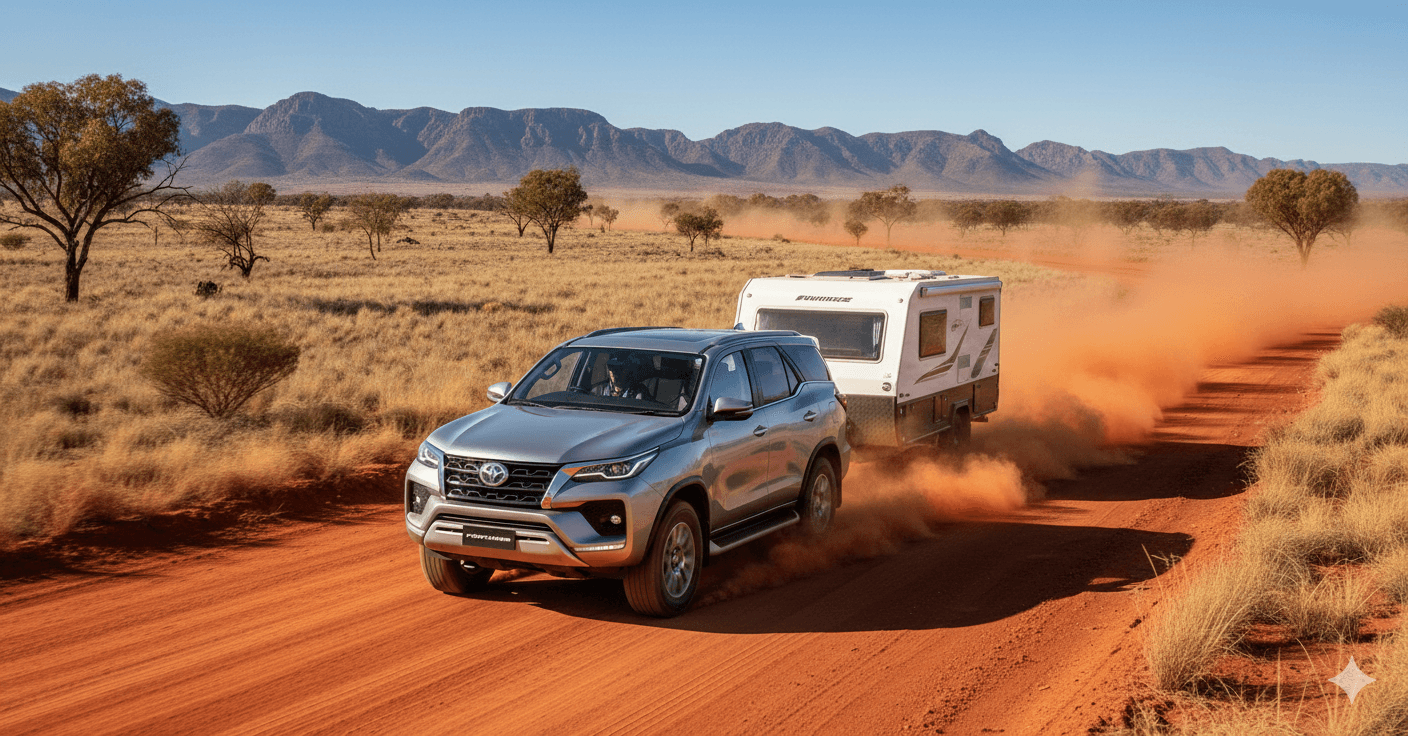
Australian conditions are among the toughest in the world. Drivers face:
- long distances
- remote environments
- corrugated roads
- extreme heat
- heavy towing needs
- off road tracks
- regional touring
The Fortuner fits naturally into this environment.
Reliable Turbo Diesel Power for Real Australian Use
The 2.8 litre diesel delivers strong pulling power even under load. It provides predictable performance when towing uphill, climbing loose terrain, or overtaking on highways.
Proper Four-Wheel Drive System
The Fortuner is not a soft roader. It offers:
- low range gearing
- rear locking differential in some variants
- traction control calibration for off road use
- suspension tuned for rugged surfaces
These features allow the SUV to tackle tracks that would challenge lighter crossovers.
Safe and Capable Towing
With a rating of 3100 kg, the Fortuner suits:
- off road caravans
- camper trailers
- medium boats
- horse floats
- trade tools
Its stability systems help maintain control even at highway speeds.
Fuel Efficiency for Long Distance Travel
Efficient diesel consumption makes it easier to travel across remote regions without excessive fuel stops.
Resale Value and Low Ownership Costs
Toyota vehicles consistently hold their value in Australia. The Fortuner’s reputation for durability and reliability encourages strong resale performance, particularly in the used market.
Chapter Six. Cabin Comfort, Technology, and Modern Functionality
The Fortuner has steadily evolved into a more comfortable and family friendly SUV.
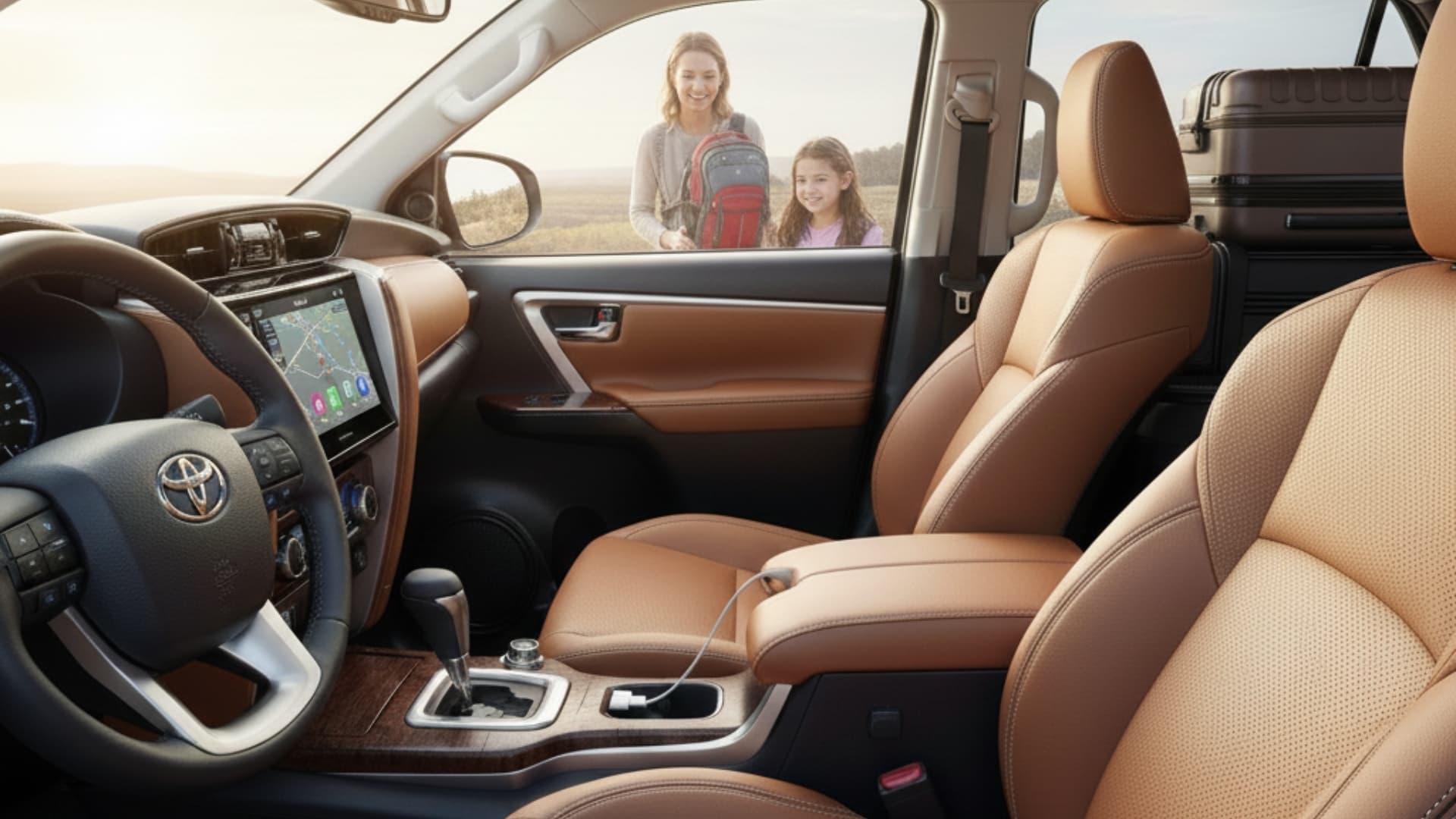
Improved Seating for Long Drives
Toyota refined seat cushioning, lumbar support, and fabric durability. Higher trims include leather accented seats, powered adjustments, and temperature control.
Practical Storage Solutions
The cabin provides:
- large door pockets
- multiple cup holders
- overhead storage
- a chilled glovebox
- under floor storage
- split folding seats
Families appreciate the versatility.
Third Row Usability
The third row now folds flat into the floor in many markets, creating more practical cargo space. Access has also improved through wider second row movement.
Infotainment That Meets Modern Expectations
Features include:
- large touchscreen
- smartphone integration
- voice control functions
- premium audio options
- satellite navigation in some trims
The user experience is more intuitive and better suited for long drives.
Comprehensive Safety Systems
Depending on market and model year, the Fortuner includes:
- pre collision braking
- lane departure alerts
- adaptive cruise control
- blind spot monitoring
- rear cross traffic alert
- seven airbags
- improved structural rigidity
Safety has become a core selling point.
Chapter Seven. The Fortuner’s Strategic Position in the Global SUV Market
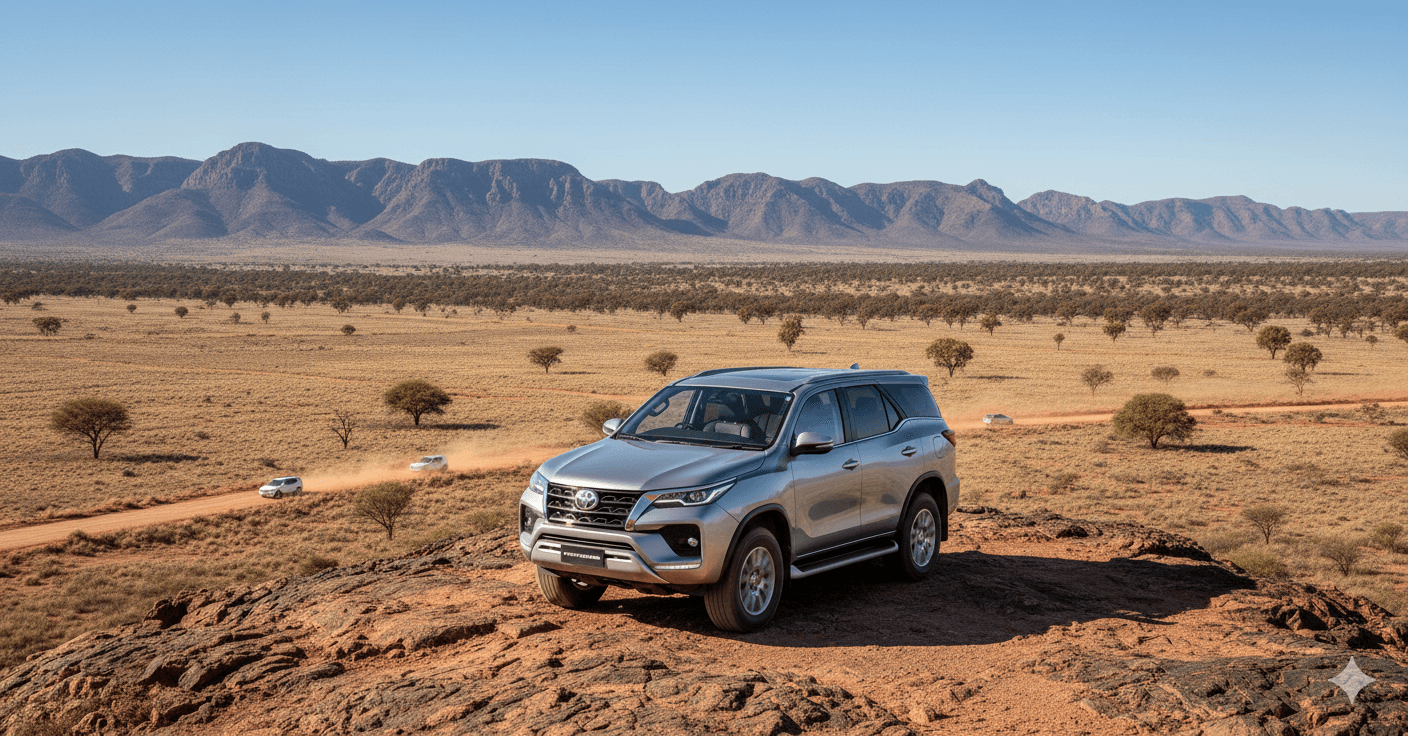
The Fortuner occupies a unique space. It is positioned between more expensive large SUVs and smaller crossovers that lack true off road strength.
Why Many Buyers Prefer It Over Softer SUVs
Modern crossovers may provide comfort, but they cannot match:
- frame strength
- load capacity
- off road capability
- genuine towing performance
The Fortuner appeals to buyers who want a practical, long-lasting SUV that does not compromise on durability.
Why It Outperforms Some Traditional Large SUVs in Value
Vehicles like the LandCruiser and Prado offer more luxury, but they come with significantly higher price tags. The Fortuner captures the same spirit of adventure at a more accessible price point.
A Model Suited for Harsh Environments
The Fortuner is widely used in:
- rural Africa
- Southeast Asia
- Middle East deserts
- Australian outback
- South American mountains
- fleets and government operations
These environments demand dependable engineering. The Fortuner excels because it is built for exactly this purpose.
Chapter Eight. What the Future May Hold for the Toyota Fortuner
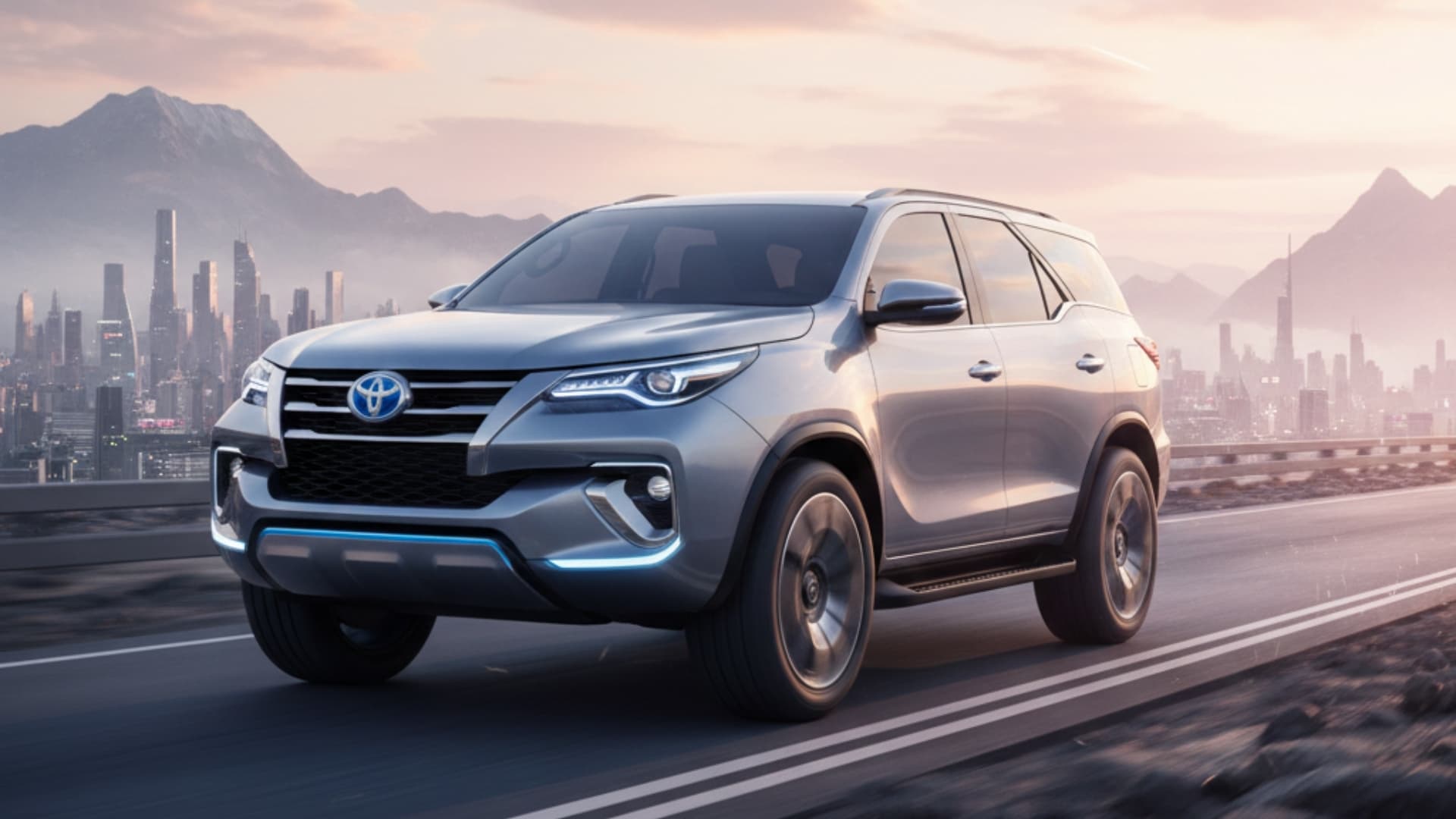
The next generation of the Fortuner is expected to follow global automotive trends while preserving the core strengths that made it successful.
Likely Future Features Based on Industry Direction
Experts anticipate developments such as:
- hybrid diesel or petrol options
- improved fuel economy
- more advanced driver assistance systems
- updated infotainment
- enhanced towing strength
- sharper styling
- stronger chassis rigidity
- more refined cabin materials
Toyota will likely integrate electrification without compromising durability.
Balancing Modern Technology with Off Road Capability
The biggest challenge for future models will be integrating electric or hybrid systems while maintaining:
- low range gearing
- robust frame strength
- high payloads
- safe heavy towing
Toyota has proven with the LandCruiser 300 that it can modernise powertrains without sacrificing performance, so similar innovation is likely for the Fortuner.
Maintaining Global Appeal
Toyota must continue adapting features to regional needs. Models sold in Australia may prioritise towing and off-road performance, while models in Asia may focus on urban comfort and fuel efficiency.
Chapter Nine. Why the Fortuner Has Become a Benchmark in Its Class
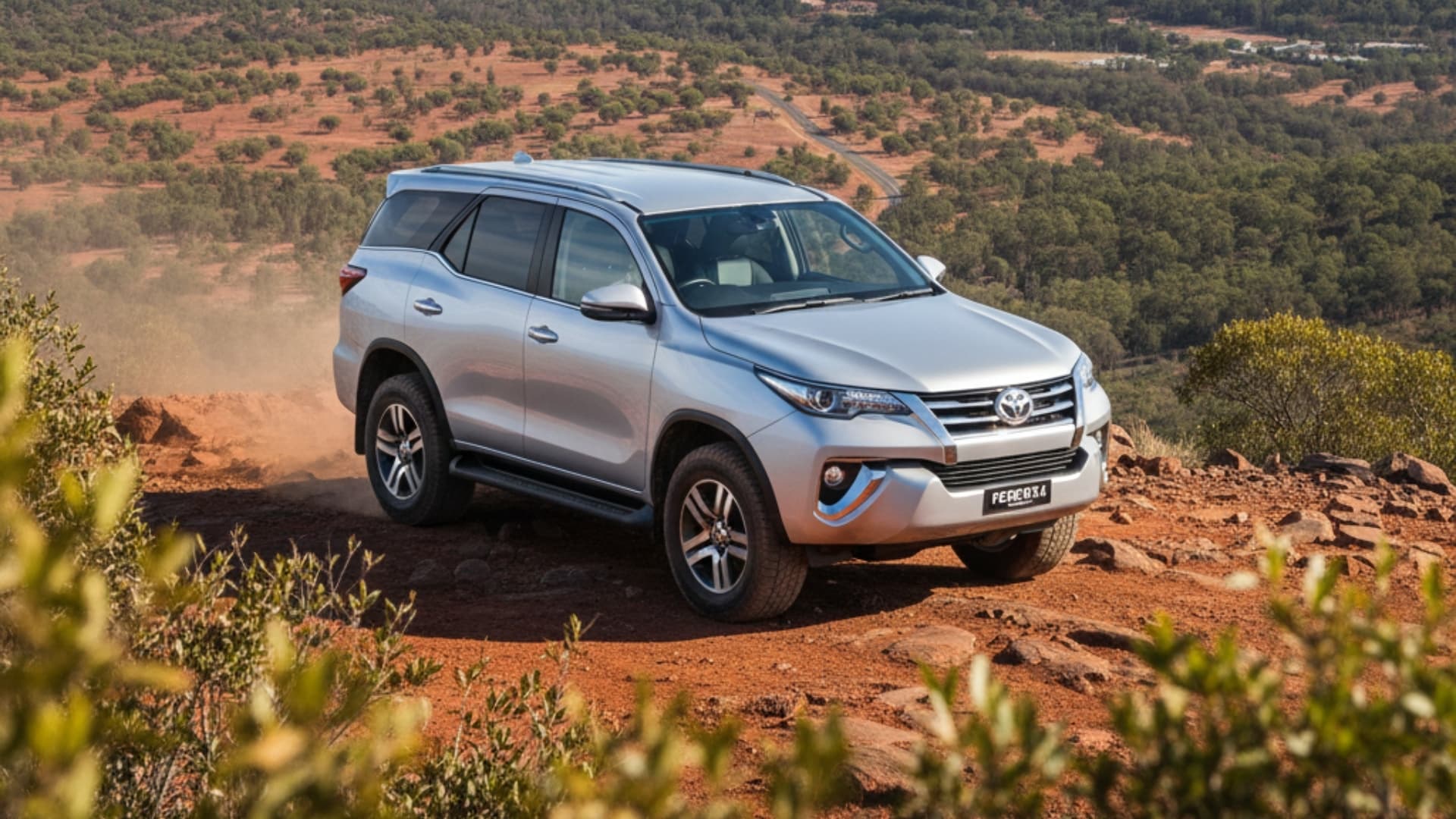
After nearly two decades of evolution, the Fortuner has earned a reputation for delivering a rare combination:
- real off-road ability
- comfortable family space
- strong turbo diesel power
- reliable engineering
- low ownership costs
- high resale value
- practical technology
- serious towing capability
- proven long term durability
Many SUVs prioritise style or comfort. Others prioritise toughness. The Fortuner stands out because it balances both worlds.
The Fortuner’s Core Strengths Summarised
- True ladder frame toughness
- Strong and efficient 2.8 litre turbo diesel engine
- Modern safety and driver assistance
- Proper 4x4 system suitable for Australian conditions
- Comfortable cabin for long journeys
- Practical third row seating
- Suitable for families, workers, and adventurers
- Excellent resale value
- Suitable for remote touring
- Low maintenance costs and widespread parts availability
These strengths make it ideal for both everyday driving and demanding conditions.
The Fortuner as a Perfectly Balanced SUV
The Toyota Fortuner has evolved into a model that represents thoughtful engineering and purposeful design. It started as a rugged, practical SUV built on the dependable Hilux platform. Over time, it transformed into a refined family friendly vehicle while still maintaining its legendary strength.
Its journey reflects Toyota’s long-term approach. The brand listens to its customers, studies market conditions, and applies steady improvements. Each generation becomes more capable, more comfortable, and more suited for real world needs. Today, the Fortuner is an SUV that delivers confidence on every journey. Whether travelling through city traffic, towing a caravan across the country, or tackling a remote off-road track, it performs with the reliability and strength that Toyota is known for.
It is not only a vehicle with power. It is a vehicle with purpose. And that is why the Fortuner continues to be one of the most respected SUVs in Australia and across the world.
Ready to own a Fortuner of your own? Visit our website now to explore all the models available in our yard!