

A Brief History of the Nissan Patrol
The Nissan Patrol stands alongside the Toyota LandCruiser as one of the true legends of off-road durability and heritage. Introduced in 1951, it remains Nissan’s longest-running model line.
1st Generation (1951–1960)
Introduced shortly after WWII, the Patrol was inspired by the Willys Jeep. Early versions featured a 3.7 L engine, 4-speed manual gearbox, and part-time 4WD. It evolved through the variants, increasing engine displacement and cosmetic updates. A more utilitarian pickup was also part of the lineup.
2nd Generation (1960–1980)
This generation marked the Patrol’s global expansion, including its introduction in Australia. Powered by Nissan’s P-series 4.0 L inline-six petrol engine, it offered a sturdier five-door long-wheelbase wagon and pickups. It became the first Patrol to cross Australia’s Simpson Desert, a testament to its rugged capability
3rd Generation (1980–1989)
Here, Patrol began to shift toward comfort and choice. It debuted diesel engines and automatic transmissions, offering a smoother, more refined ride. Engines ranged from 2.4 L to 4.0 L petrol and 2.7–3.2 L diesel options, all available in both SWB and LWB formats
4th Generation (1987–1997)
The model loved by purists, the Y60 delivered coil-spring suspension for vastly improved handling and ride comfort. It offered robust 4.2 L petrol and 2.8/4.2 L diesel engines. Ford rebadged this model as the Maverick in Australia, a testament to its capability.
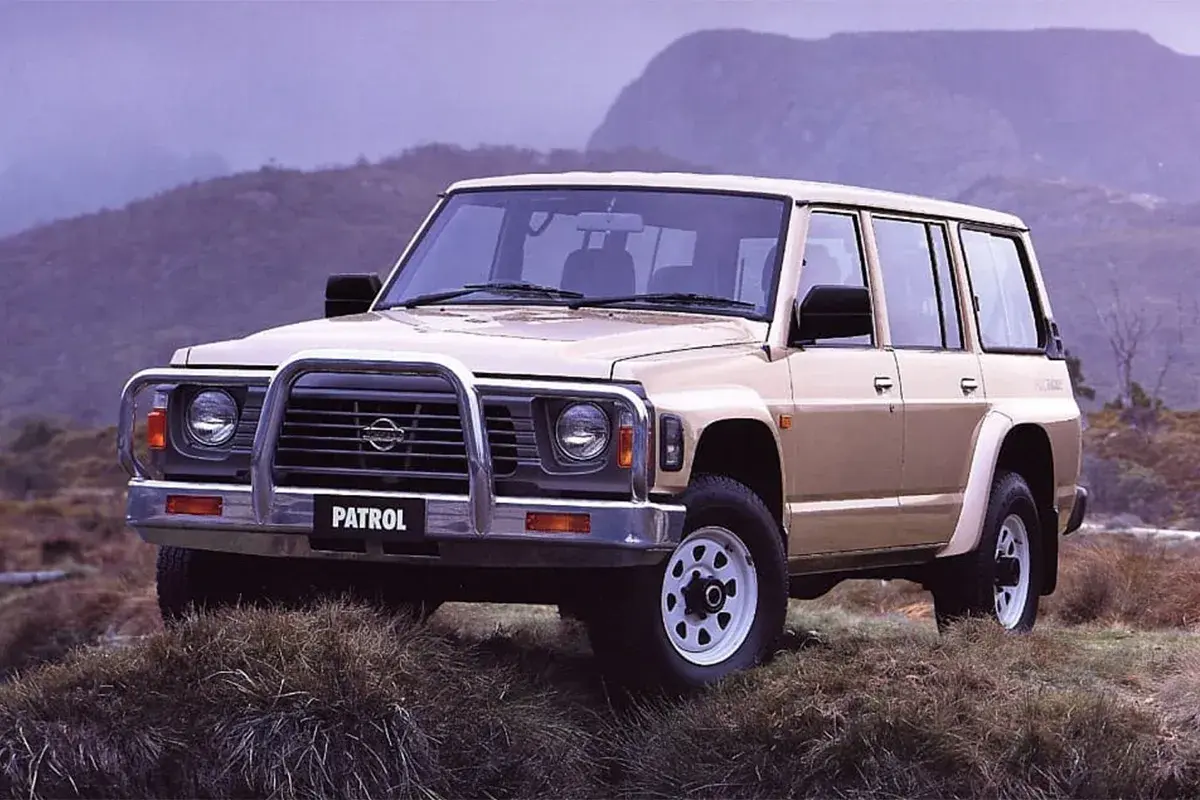
The GQ Patrol (Y60; 1988–1997): An Enthusiast’s Favourite
The Nissan GQ Patrol, known internally as the Y60, marked a pivotal moment in the Patrol’s evolution. Released in 1988, it was the first Patrol to feature coil-spring suspension in the front and rear, a massive leap forward in ride quality and articulation over the leaf-sprung MQ models that came before it. This advancement helped the GQ not only rival the 60 and 80 Series LandCruisers but also carve out its own legacy among serious 4WDers and long-distance travellers.
Engine Options
One of the GQ’s enduring appeals is the range of dependable engines offered, particularly the inline-six diesel options that earned a reputation for reliability in Australia’s toughest conditions.
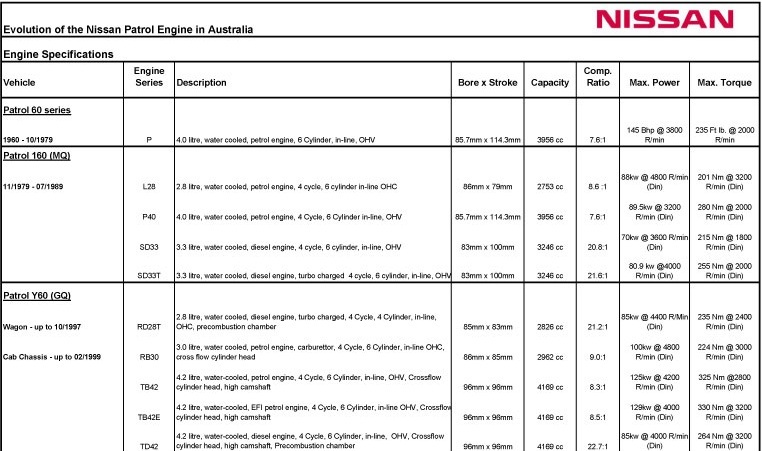
Petrol options:
-
3.0L TB30S inline-six (carbureted)
-
4.2L TB42 and TB42E (fuel-injected in later years)
Diesel options:
-
2.8L RD28T turbo-diesel (6-cylinder): Common but underpowered for towing or heavy mods
-
4.2L naturally aspirated TD42: Legendary reliability, extremely popular for touring builds
-
4.2L TD42T (factory turbo): Available in high-spec later models, now highly collectable
The TD42 is widely regarded as one of the toughest diesel engines ever built. With proper servicing, these engines can exceed 500,000km, and they respond well to performance upgrades with many owners adding turbo kits, intercoolers, and pump mods.
Drivetrain and Capability
All GQ models were part-time 4WD with a dual-range transfer case, strong live axles in the front and rear, and optional rear LSD or lockers depending on trim. The chassis and driveline were overbuilt, contributing to the Patrol’s reputation as nearly unbreakable.
Key off-road highlights:
-
Robust H233B rear diff
-
Long-travel coil springs
-
Tough ladder frame
-
Generous approach/departure angles
-
Factory snorkel on some Ti models
Whether you're tackling technical rock sections or corrugations on the Gibb River Road, the GQ Patrol remains a go-anywhere platform, and it’s become a go-to for budget overlanders, DIY modders, and weekend warriors.
Trims and Features
The GQ Patrol was offered in several body styles including short wheelbase (SWB), long wheelbase (LWB), and coil-cab ute configurations. Most common trims include:
-
DX – Base spec, vinyl floors, basic instrumentation
-
ST – Cloth seats, power steering, optional LSD
-
Ti – High-spec with power windows, air con, and in some cases a sunroof and leather
While creature comforts were limited by modern standards, the GQ’s cabin was built tough, and many interior parts are still available today through aftermarket suppliers.
Why Enthusiasts Still Love the GQ Today
Despite being out of production for over 25 years, the GQ Patrol maintains a cult following in Australia, and with good reason:
Mechanical simplicity – Minimal electronics, easy to work on at home or in the bush
Mod-friendly platform – Lift kits, lockers, turbos, drawers, long-range tanks — you name it
Low entry cost – Still one of the most affordable platforms for serious 4WD builds
Classic design – Boxy, tough, and instantly recognisable on the tracks
Massive aftermarket support – ARB Accessories, Superior Engineering, Patrolapart, and Terrain Tamer all stock parts and gear
The downside? Many GQs are now high-kilometre, heavily modified, or rust-prone (especially around the rear quarter panels, roof gutters, and chassis rails). Buyers need to be diligent with inspections and wary of hard-used ex-tourers or DIY builds with questionable wiring and cooling mods.
Should You Still Buy a GQ Patrol?
If you’re an enthusiast who wants a solid base for off-roading or remote touring, (and you’re prepared to turn a spanner) the GQ Patrol is still a viable and rewarding option. While newer Patrols offer more comfort and safety tech, the GQ remains the spiritual favourite of many in the 4WD community.
For DIYers, overlanders, and anyone nostalgic for a time when 4WDs were built to last and not just to look good on school runs, the GQ is a living legend.
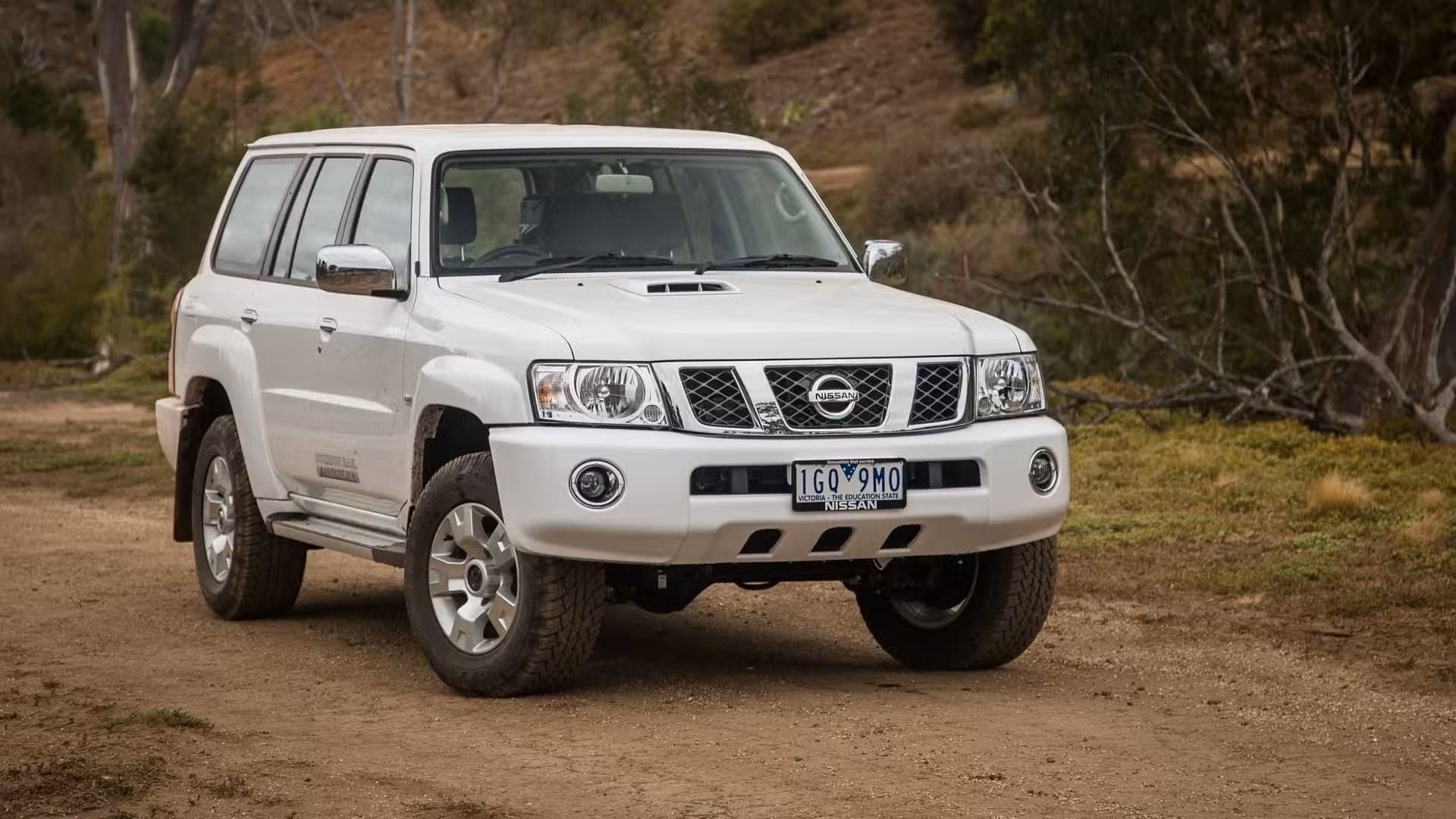
The GU Patrol (Y61; 1997–2016 in Australia, 2005+ Focus)
When Nissan launched the GU Patrol (Y61) in 1997, it refined the tough, coil-sprung platform of the GQ (Y60) and added improved comfort, safety, and drivability. In Australia, the GU became the Patrol’s defining generation — battling the Toyota LandCruiser 100 and 200 Series for supremacy throughout the 2000s. Production officially ended for the Australian market in 2016, but the GU lives on as a cult favourite, especially in post-2005 guise.
Engines and Drivetrain
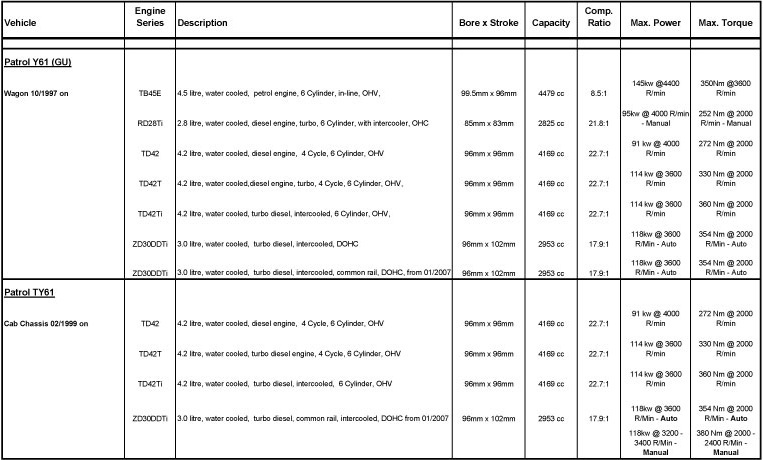
The GU offered a broad spread of engines over its long life, but two stand out as the most important in the Australian market:
ZD30 3.0L Turbo-Diesel (2000–2016)
-
Output: ~118kW / 354Nm (varied slightly by year)
-
Transmission: 5-speed manual or 4-speed auto
-
Pros: More fuel-efficient than the 4.2, widely available, cheaper to buy used
-
Cons: Early versions (2000–2003) had a reputation for “grenading” due to weak pistons and oiling issues. Later common-rail versions (2007 onwards) were improved, but careful maintenance is still critical.
TD42 4.2L Diesel / Turbo-Diesel (1997–2007)
-
Output: 85–114kW / up to 360Nm in turbo versions
-
Transmission: 5-speed manual only
-
Pros: Legendary reliability, mechanical fuel injection, known to survive 500,000km+ with proper care
-
Cons: Slow by modern standards, noisier, thirstier, and increasingly expensive on the used market
Other less common engines included the TB45 4.5L petrol and TB48 4.8L petrol inline-sixes (the latter hugely popular in the Middle East), but in Australia the diesels dominate the conversation.
Driveline:
-
Heavy-duty ladder chassis with live axles front and rear
-
Part-time 4WD with dual-range transfer case
-
Strong differentials (H233B rear, H260 on some TD42 models)
-
Optional factory diff locks in higher trims
The GU remains one of the most capable off-roaders in stock form, and its driveline is famously tough — a major reason it’s still in demand.
Trims and Equipment
The GU was offered in a wide range of trims, with naming conventions shifting slightly over time. Common specs include:
-
DX – Basic workhorse, vinyl floors, minimal electronics (popular with fleets and mods)
-
ST – The volume seller, with cloth trim, alloys, better audio, air con, and later sat nav
-
ST-L / Ti – Luxury-oriented with leather seats, power windows, premium audio, and alloy wheels
-
Ti-L (late models) – Flagship trim with leather, woodgrain, sat nav, and additional safety kit
Body styles:
-
Wagon (3-door SWB and 5-door LWB)
-
Ute (“coil cab” or “leaf cab” variants), still highly sought for touring builds
Off-Road Capability
The GU Patrol is considered by many enthusiasts to be one of the most capable 4WD platforms ever sold in Australia. Its combination of coil-sprung suspension, strong driveline, and aftermarket support makes it a go-to for serious off-road builds.
Key highlights:
-
Long-travel suspension with huge aftermarket lift kit potential
-
Factory rear LSD (effective in earlier years)
-
Optional factory front and rear lockers (rare and valuable)
-
Large wheel arches allow 33-inch tyres with minimal mods
-
Heavy-duty axles and gearbox capable of handling big torque upgrades
Owners commonly modify GUs with turbo kits (for TD42s), bigger intercoolers, long-range fuel tanks, winches, bar work, and dual-battery setups. The platform is considered nearly indestructible if maintained properly.
Interior and Comfort
Compared to the GQ, the GU offered a far more refined cabin. By 2005 onwards, interiors featured:
-
Larger centre console and better sound insulation
-
Improved seating support for long-distance driving
-
Updated dashboards with revised instrument clusters
-
Optional leather upholstery in higher trims
That said, compared to a LandCruiser 100 or 200 of the same era, the GU feels more utilitarian. Buyers prioritising ruggedness over luxury won’t mind, but families may find it dated by today’s standards.
Known Issues
Despite its bulletproof reputation, the GU Patrol does have some well-known weaknesses:
-
ZD30 “hand-grenade” issues (2000–2003): Early engines could fail catastrophically due to piston failures. Later revisions are better but still require diligent servicing (regular oil changes, EGR maintenance, monitoring boost and exhaust temps).
-
Clutch wear on TD42s if used heavily for towing.
-
Rust around roof gutters, rear windows, and chassis rails.
-
Suspension wear (control arm bushes, panhard rods) is common in lifted/touring setups.
-
Cooling systems on TD42s can be marginal when pushed hard, making radiator upgrades common.
Resale and Buyer Advice
The GU Patrol holds its value incredibly well, especially TD42-powered examples. A clean, low-kilometre TD42 turbo-diesel can fetch over $50,000 today, despite being nearly 20 years old. ZD30 models are far cheaper (sometimes under $20k), but buyers should budget for preventative upgrades.
Best picks for buyers:
-
2005–2007 TD42T ST/ST-L – The sweet spot for reliability and long-term ownership
-
2007+ ZD30 common-rail ST – Affordable entry into GU ownership with improved engine design
-
Ute/Coil Cab versions – Highly prized for touring and towing, especially with TD42
For anyone seeking a tough, mod-friendly 4WD that can outlast trends, the GU Patrol is still one of the best options in the market.
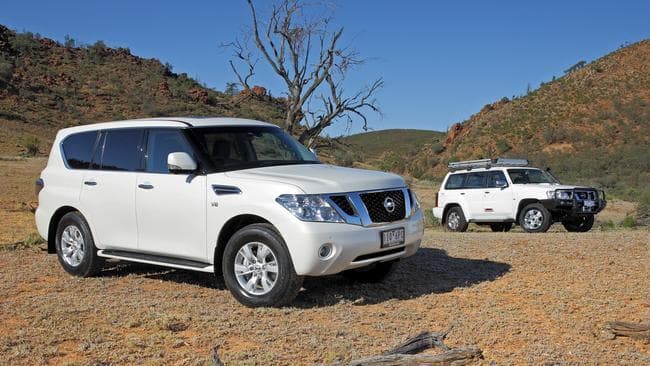
The Shift to the Y62 Patrol (2010–Present)
By the late 2000s, the 4WD market was changing. Buyers wanted more than rugged reliability, they wanted luxury, technology, and refinement alongside off-road ability. In 2010, Nissan launched the Y62 Patrol, representing the biggest philosophical shift in the model’s history.
Gone was the diesel workhorse formula that had defined the Patrol for decades. In its place came a petrol-only 5.6L V8, a refined independent suspension setup, and a cabin packed with technology and comfort features. Where the GU Patrol was a tool of choice for farmers, miners, and hardcore tourers, the Y62 was aimed squarely at competing with Toyota’s LandCruiser 200 Series in the luxury SUV market.
This move divided enthusiasts, some lamented the loss of the legendary TD42 diesel, while others embraced the Y62’s powerful V8, plush ride, and premium equipment. Over a decade later, the Y62 has cemented itself as a serious competitor, both as a family SUV and as a towing and touring platform.
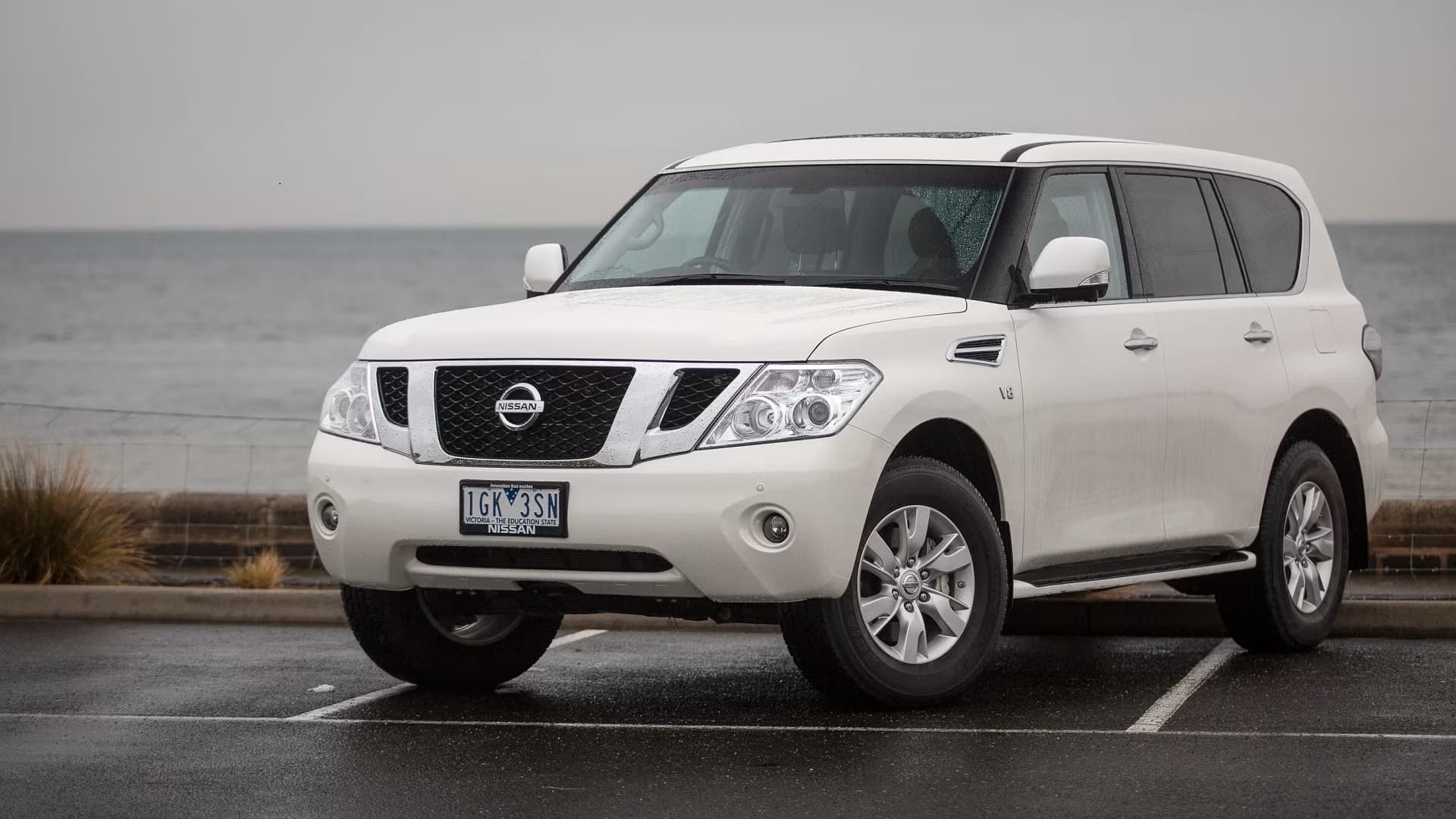
The Y62 Patrol (2010–Present)
The Y62 marked a radical departure from the Patrols before it. Instead of a rugged diesel workhorse, Nissan introduced a luxury-oriented, petrol-only SUV with independent suspension all round. While controversial at launch, the Y62 has since proven itself as a comfortable, powerful, and capable 4WD in its own right.
Phase 1: Launch (2010–2013)
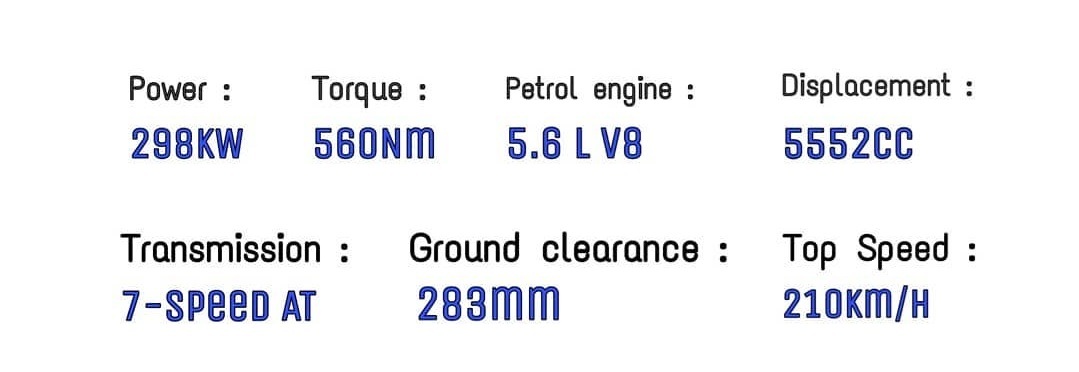
The Y62 debuted globally in 2010, arriving in Australia in 2013. Its most striking difference was under the bonnet — a 5.6L VK56VD V8 petrol engine producing 298kW and 560Nm, paired with a 7-speed automatic transmission. This gave the Y62 incredible on-road performance and effortless towing ability, easily outpacing diesel rivals for outright power.
The suspension design also changed completely, moving from live axles to a fully independent setup with Nissan’s Hydraulic Body Motion Control (HBMC) system. This tech improved ride comfort and cornering stability while still offering strong off-road articulation.
Inside, the Y62 took a leap toward luxury, offering:
-
Leather-accented interiors
-
Premium infotainment systems
-
7-seat layouts with improved legroom
-
Advanced driver aids like hill descent control and multiple terrain modes
Buyers at the time were divided — traditionalists lamented the loss of a diesel engine and solid axles, while others embraced the newfound comfort and refinement.
Phase 2: First Facelift (2014–2019)
In 2014, the Y62 received a major update to styling, technology, and equipment levels. The exterior was refreshed with a bolder grille, revised headlights, and updated bumpers, aligning it more closely with Nissan’s global SUV design language.
Inside, improvements were made to:
-
Infotainment systems with larger screens
-
Premium audio in higher trims
-
Enhanced materials and finishes across the cabin
Mechanically, the Patrol retained the same 5.6L V8, but calibration tweaks made it smoother and slightly more fuel-efficient (though it remained a thirsty SUV, typically averaging 14–17L/100km in real-world use).
Trims expanded, with Ti and Ti-L becoming the most popular in Australia. The Ti was positioned as the family-friendly, value-focused variant, while the Ti-L added luxury features like:
-
Heated/cooled front seats
-
Sunroof
-
Advanced safety features (blind-spot monitoring, lane departure warning)
By this stage, the Y62 was carving out a niche as a tow vehicle of choice, thanks to its effortless V8 torque and 3,500kg braked towing capacity.
Phase 3: Second Facelift (2020–Present)
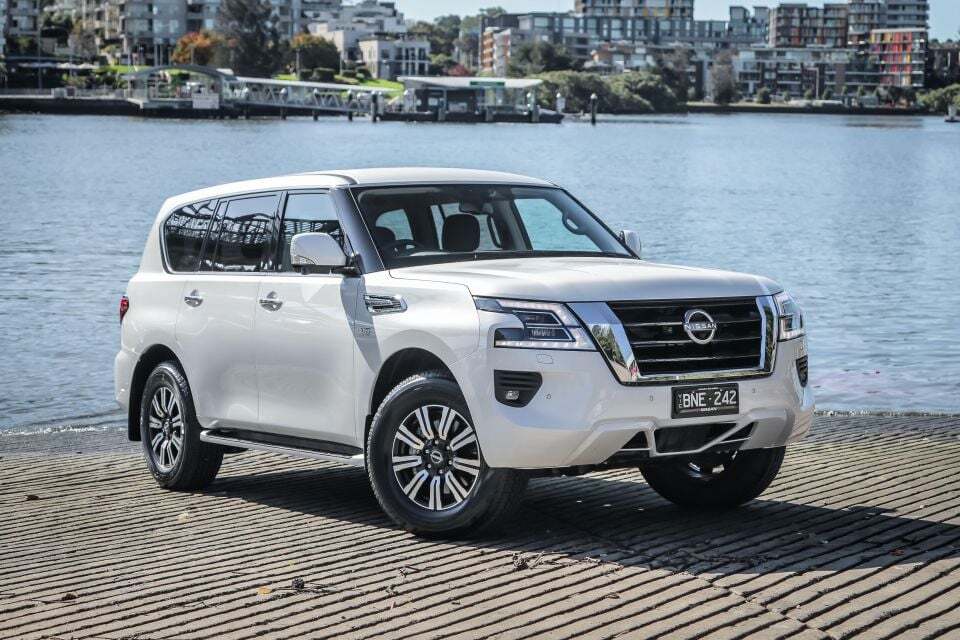
In 2020, the Patrol received its most significant refresh yet, giving it a sharper, more modern design and the tech upgrades it needed to stay competitive.
Exterior updates:
-
New front fascia with larger chrome grille
-
LED headlights and taillights with signature DRLs
-
More muscular, squared-off design
Interior upgrades:
-
Dual-screen infotainment setup
-
Apple CarPlay and Android Auto (from 2020)
-
Revised climate control and switchgear layout
-
More active safety systems standardised (AEB, adaptive cruise, rear cross-traffic alert)
The mechanicals remained largely unchanged — still powered by the mighty 5.6L V8 — but refinement was improved, making the Y62 quieter and more comfortable on long journeys.
Buyer note: This facelift has made the 2020+ Y62 Patrols the most desirable in the used market, particularly for buyers who want modern tech alongside tried-and-true mechanicals.
Y62 Strengths and Weaknesses
Strengths:
- Powerful 5.6L V8 — unmatched towing and highway performance
Comfortable, quiet ride with HBMC suspension - Huge interior space and genuine 7-seat usability
- Excellent value compared to LandCruiser 200/300 Series rivals
- Strong aftermarket support for touring upgrades (lift kits, bar work, long-range tanks)
Weaknesses:
- No diesel option — limits appeal for outback tourers who prefer diesel’s range and economy
- High fuel consumption (14–20L/100km in the real world)
Large size makes it less city-friendly - Some owners report expensive parts and servicing compared to older Patrols
The Future: Y63 Patrol
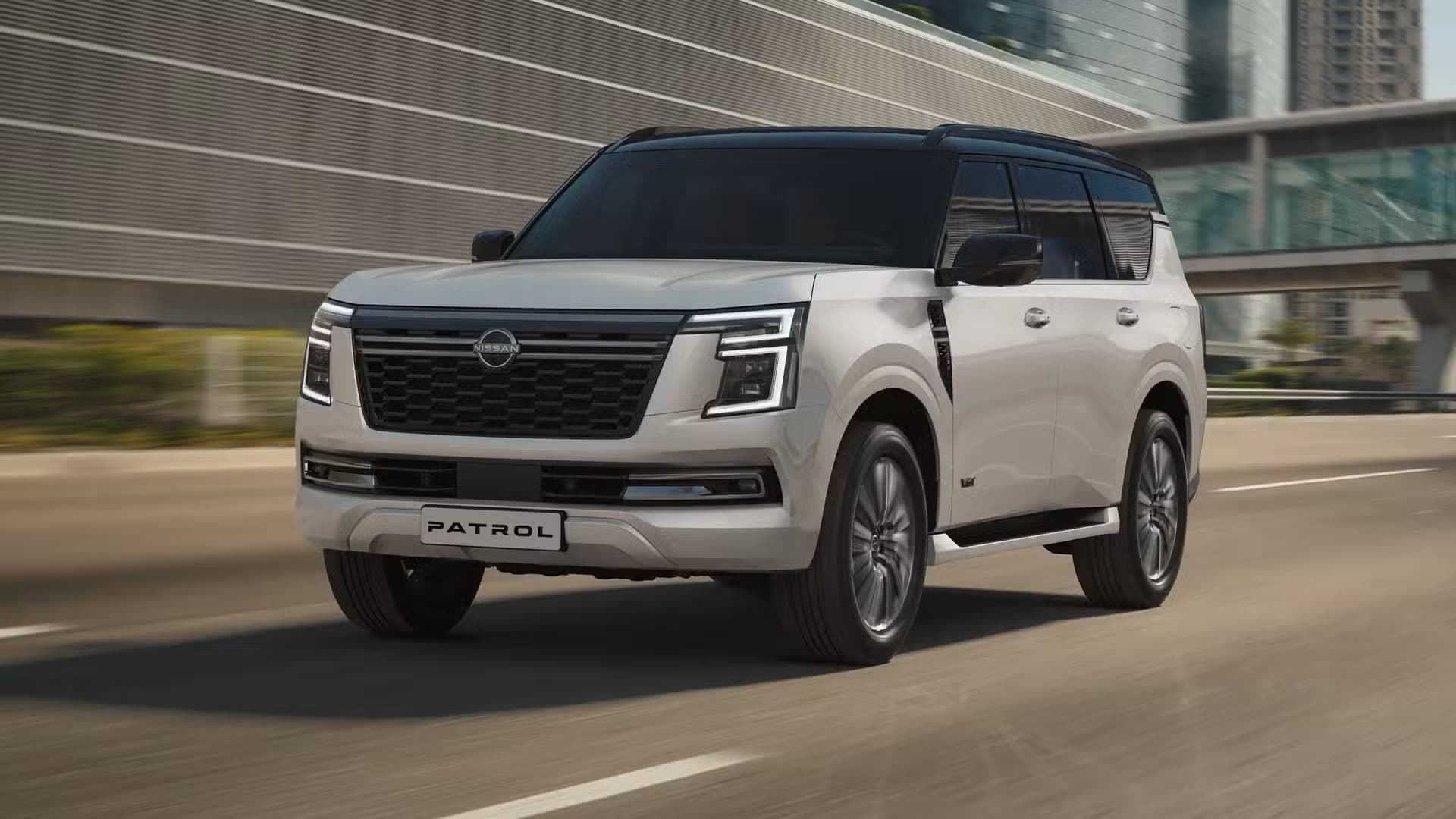
Nissan is preparing the next-generation Patrol (Y63), expected in some markets around 2025, and in Australia by the final quarter of 2026. While details are still emerging, industry reports suggest the Y63 will continue to push the Patrol further into luxury territory while addressing changing market demands.
Expected Changes:
-
Downsizing from V8 to twin-turbo V6: Much like Toyota’s move with the LandCruiser 300, Nissan is likely to replace the 5.6L V8 with a smaller-displacement twin-turbo V6 for better efficiency while maintaining high outputs.
-
Hybrid or electrified options: To meet tightening emissions standards, hybrid assistance is rumoured, offering improved economy and low-end torque.
-
Advanced safety and tech: Expect Level 2 driver assistance (adaptive cruise with lane centring, auto lane change), larger digital dashboards, and seamless smartphone connectivity.
-
Refined off-road systems: Building on HBMC and terrain modes, the Y63 may introduce AI-assisted traction control and improved towing stability.
Why the Changes?
-
Emissions regulations: Large-capacity petrol V8s are increasingly unsustainable in global markets.
-
Fuel economy pressures: Buyers want more efficiency, especially as fuel costs rise.
-
Market positioning: The Patrol must keep pace with the LandCruiser 300 and other luxury SUVs, where tech and refinement are now as important as raw capability.
Final Thoughts: Patrol Legacy and Future
From the coil-sprung GQ loved by purists, to the rugged and mod-ready GU, and finally to the luxury-focused Y62, the Patrol has continually evolved to reflect changing buyer expectations. While the Y63 may mark the end of the naturally aspirated V8 era, Nissan’s challenge will be balancing modern efficiency with the Patrol’s legendary toughness and off-road credibility.
For buyers today, the GU Patrol remains the pick for those who want mechanical simplicity and diesel reliability, while the Y62 offers unmatched petrol V8 power, comfort, and towing strength. And for those holding out for the future, the Y63 promises a new chapter in one of the most enduring names in 4WD history.