

Few names in motoring history command respect like the Ford Mustang. Born from an idea that driving should be accessible, emotional, and thrilling, it redefined what a performance car could be. Since its debut in 1964, the Mustang has outlasted rivals, transcended borders, and evolved from a spirited street car into a world-class performance machine.
This is not just a timeline of models but a story of engineering vision, design reinvention, and a relentless pursuit of speed and emotion. The Mustang’s journey reflects six decades of change, all while keeping the same heartbeat that started it all.

1. The First Generation (1964–1973): The Birth of the Pony Car
When Ford unveiled the Mustang on April 17, 1964, at the New York World’s Fair, it ignited an automotive revolution. Affordable, stylish, and endlessly customisable, it gave young drivers a taste of performance without the premium price. Ford’s formula of a long bonnet, short rear deck, and compact proportions would become the blueprint for an entirely new segment called the pony car.
Under the bonnet, buyers could choose anything from a modest inline-six to V8s that delivered serious muscle. By 1965, the 289 HiPo V8 and later the 428 Cobra Jet turned the lightweight Mustang into a proper street and track performer. Carroll Shelby’s partnership with Ford produced the legendary Shelby GT350, a homologation special tuned for SCCA racing.
By the late 1960s, the Boss 302, Boss 429, and Mach 1 elevated the Mustang’s credibility even further. The Mustang was not only fast; it was everywhere. From drag strips to Hollywood, it became a symbol of American performance, immortalised by Steve McQueen’s chase in the 1968 film Bullitt.
Engineering Highlights:
-
Lightweight unibody construction with short overhangs
-
Optional GT, Shelby, and Boss packages for performance tuning
-
High-compression V8s and race-inspired suspension upgrades
Why It Mattered:
The first-generation Mustang connected with a generation that wanted freedom and individuality. It proved that performance could be democratic.

2. The Second Generation (1974–1978): The Era of Survival
The 1970s were a difficult decade for performance cars. The oil crisis, emissions laws, and rising insurance costs forced manufacturers to rethink their priorities. Ford’s answer was the Mustang II, a smaller and more efficient version designed for practicality and economy.
Built on the Pinto platform, the Mustang II was shorter and lighter but also quieter and more refined. Although performance took a backseat, this model kept the Mustang name alive during one of the toughest periods in automotive history.
Later versions such as the Cobra II and King Cobra reintroduced some excitement with bold decals, hood scoops, and optional V8 power. While not powerful by modern standards, they carried the torch through an era when most muscle cars disappeared.
Engineering Highlights:
- Compact design for improved fuel efficiency
- Rack-and-pinion steering for more precise control
- Reintroduction of a 302 V8 in later years
Why It Mattered:
The Mustang II was a survival story. It ensured the Mustang lineage continued when most of its competitors faded.

3. The Third Generation (1979–1993): The Fox Body Revolution
The Fox Body Mustang marked the rebirth of performance. Built on Ford’s new Fox platform, it brought improved proportions, lighter weight, and more modern engineering. It was an entirely different car, leaner and more adaptable.
The 1980s saw the return of the 5.0-litre V8, which would define the era. With up to 225 horsepower and a five-speed manual, the Mustang GT became the car of choice for tuners, drag racers, and weekend warriors. The Fox Body was easy to modify, affordable, and capable of serious performance.
The introduction of fuel injection in the mid-1980s improved both reliability and response, while police departments adopted the Special Service Package (SSP) Mustang for pursuit use, a testament to its strength and versatility.
Engineering Highlights:
- Lightweight Fox platform with improved chassis rigidity
- Electronic fuel injection and improved aerodynamics
- Iconic 5.0-litre V8 with massive tuning potential
Why It Mattered:
The Fox Body made performance attainable again. It reignited passion for American muscle in a new generation of drivers.
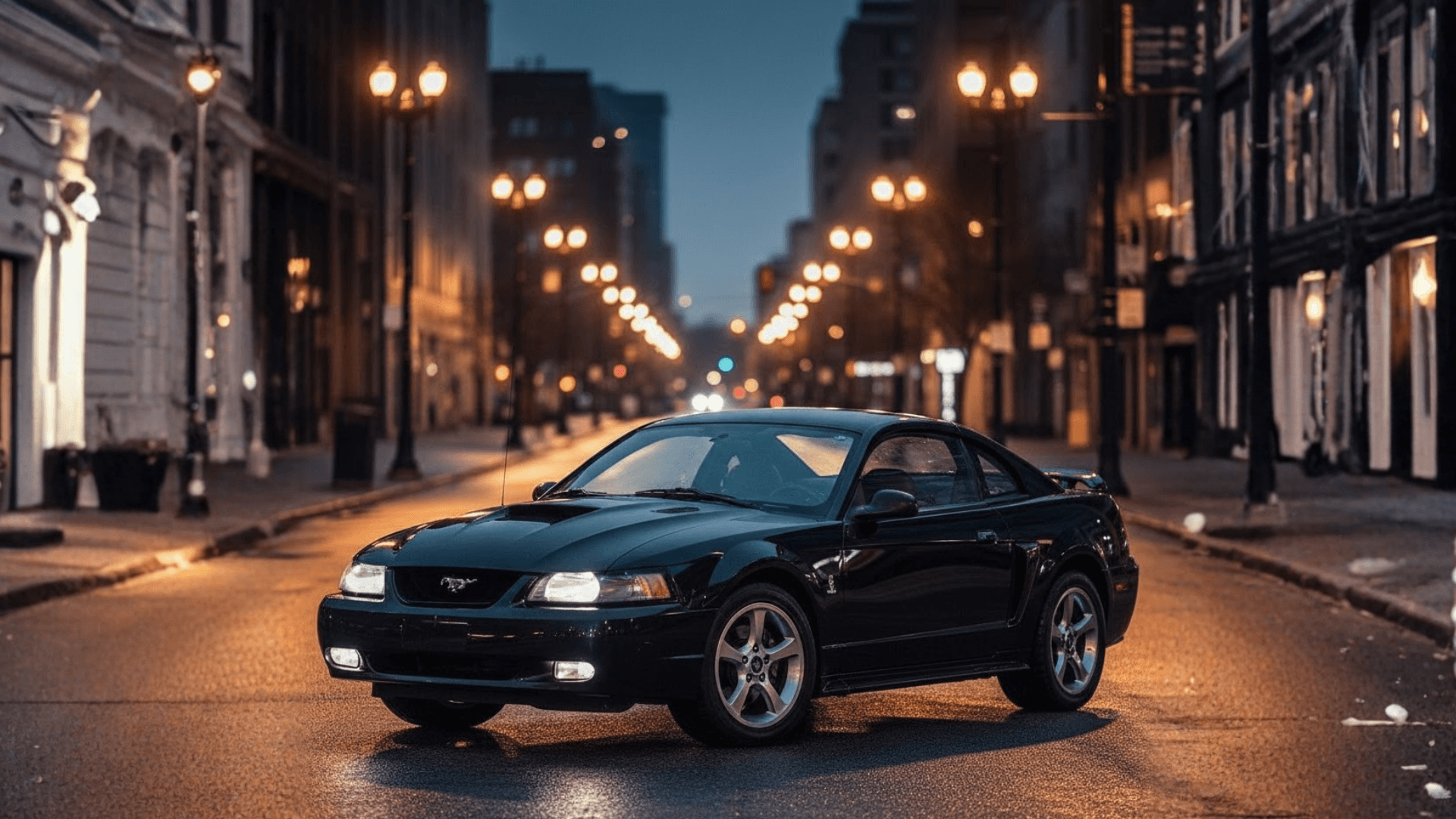
4. The Fourth Generation (1994–2004): Refinement and Reconnection
By 1994, Ford knew the Mustang needed a modern identity. The SN95 Mustang arrived with a sleek, rounded body that balanced heritage with progress. While still based on an evolved Fox platform, it featured a far more refined driving experience.
The iconic 5.0-litre pushrod V8 was replaced by the 4.6-litre Modular V8, introducing new engineering standards. The SVT Cobra, hand-built by Ford’s Special Vehicle Team, became the flagship, offering up to 305 horsepower in its early form and an incredible 390 horsepower in the 2003–2004 supercharged “Terminator” model.
This era also saw the return of heritage-inspired names like Mach 1, bridging past and present.
Engineering Highlights:
- Introduction of Modular V8 technology
- Multi-link rear suspension on SVT Cobra models
- Aerodynamic bodywork with nostalgic cues
Why It Mattered:
The SN95 Mustang was a bridge between the analog and digital eras. It delivered sophistication without losing its muscle car roots.
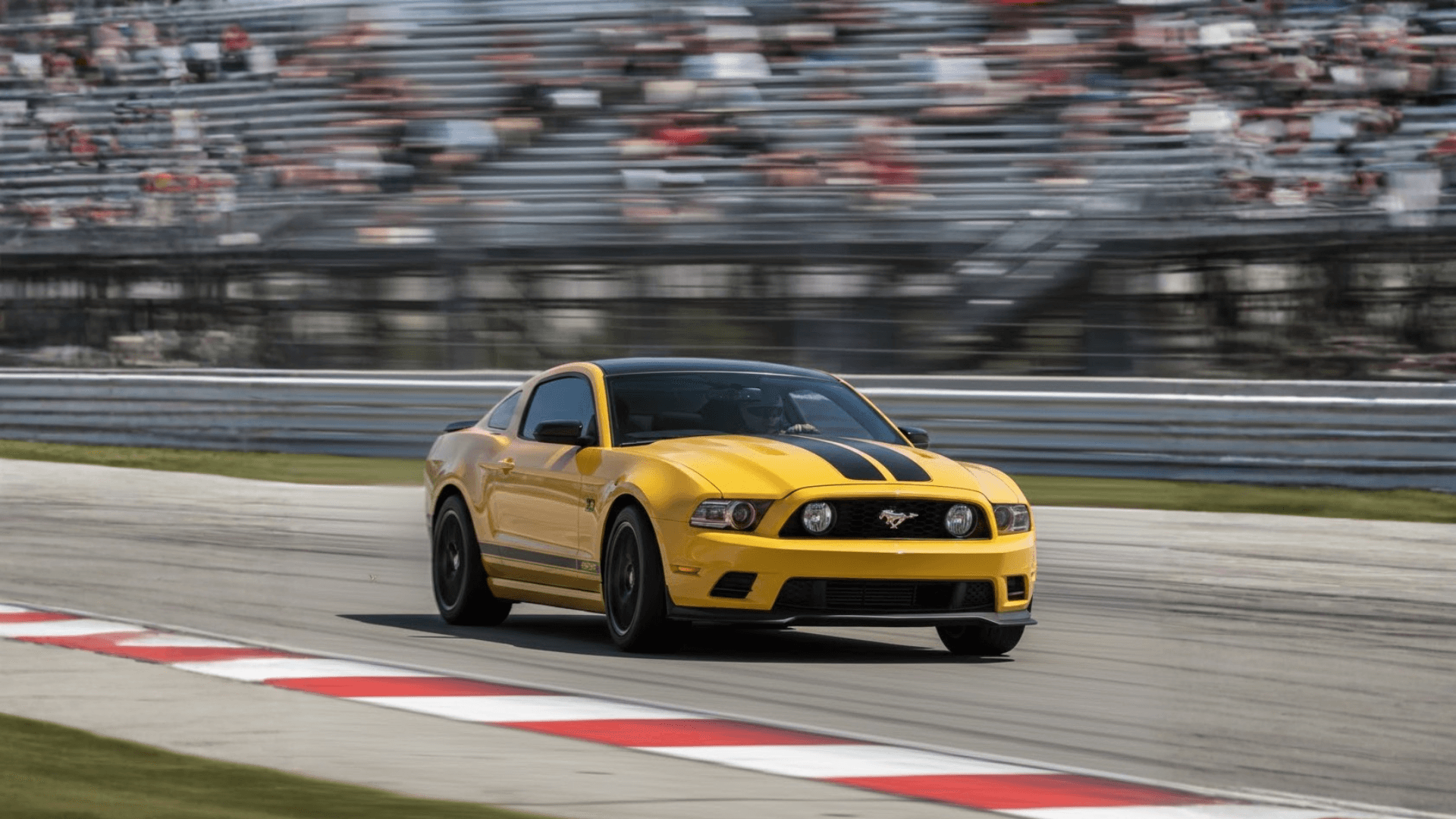
5. The Fifth Generation (2005–2014): The Return of the Legend
The S197 Mustang reintroduced the world to the classic silhouette. Its retro-inspired styling was directly influenced by the 1960s fastbacks, yet it sat on an all-new D2C platform designed for strength and improved handling.
At its heart was the re-engineered 5.0-litre Coyote V8, producing impressive power and high-revving character. Models like the Boss 302 and Shelby GT500 pushed boundaries, the latter producing up to 662 horsepower by 2013.
The S197 was raw, mechanical, and emotional. It looked back at the past while confidently charging forward.
Engineering Highlights:
- New D2C chassis improving rigidity and handling
- Coyote 5.0-litre V8 with advanced valve timing
- Introduction of performance control systems and better traction
Why It Mattered:
This generation redefined what a modern muscle car could be. It combined heritage, presence, and performance in a way that resonated globally.
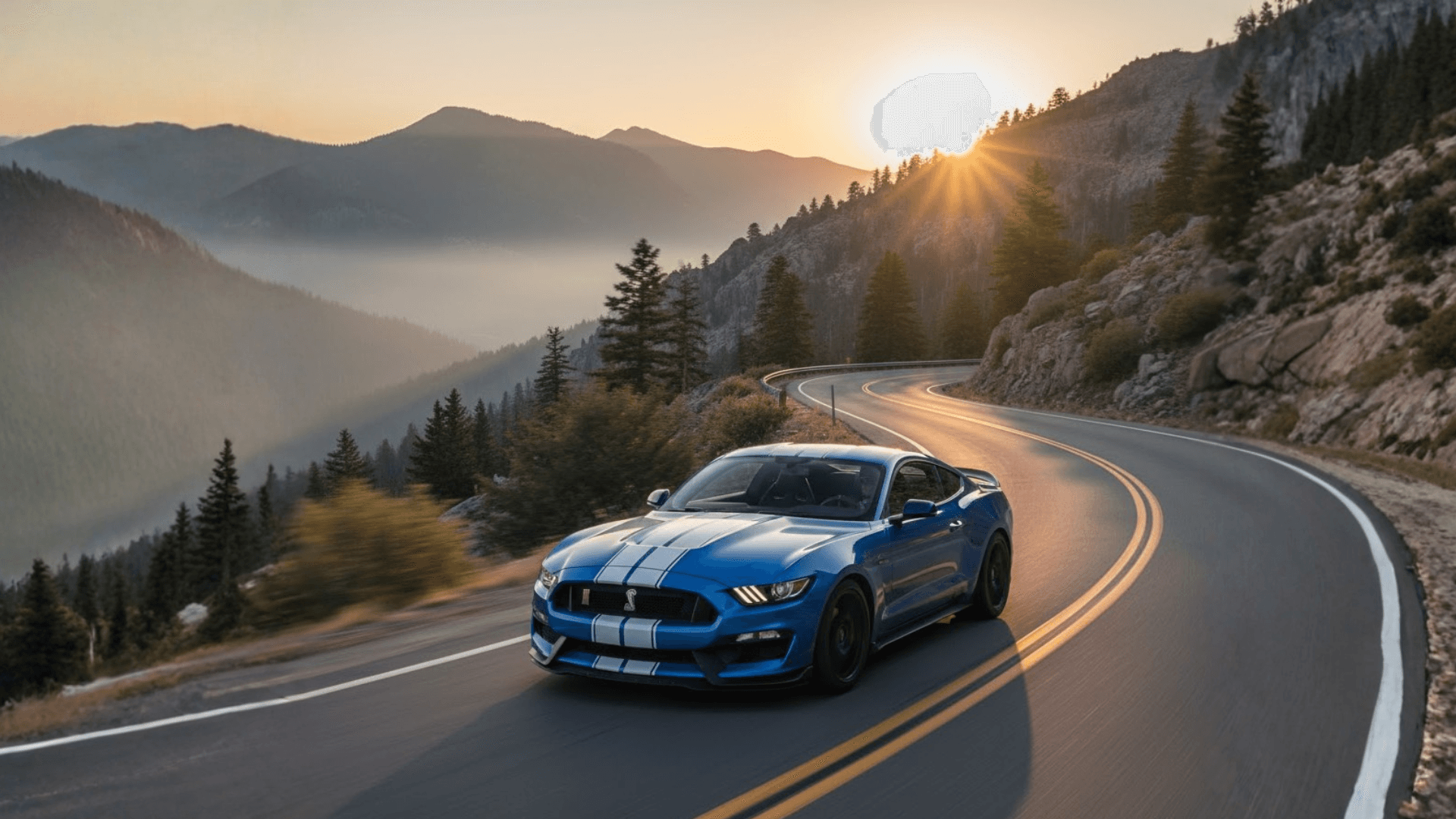
6. The Sixth Generation (2015–2023): The Global Transformation
The S550 Mustang represented a new era of global ambition. For the first time, the Mustang was engineered for right-hand-drive markets and a truly international audience. It introduced independent rear suspension, dramatically improving ride quality and cornering precision.
Engine choices expanded from the efficient 2.3-litre EcoBoost turbo-four to the classic 5.0-litre Coyote V8. The real performance benchmarks, however, were the GT350 and GT500.
The GT350’s Voodoo V8, a flat-plane crank masterpiece capable of revving beyond 8,000 rpm, became an instant legend. Meanwhile, the GT500’s Predator V8 combined supercharging and dual-clutch technology to deliver supercar-level acceleration and precision.
Engineering Highlights:
- Independent rear suspension for modern dynamics
- MagneRide adaptive damping and selectable drive modes
- Introduction of global powertrain options
Why It Mattered:
The S550 proved that American performance could stand shoulder to shoulder with Europe’s best. It was both sophisticated and unmistakably Mustang.
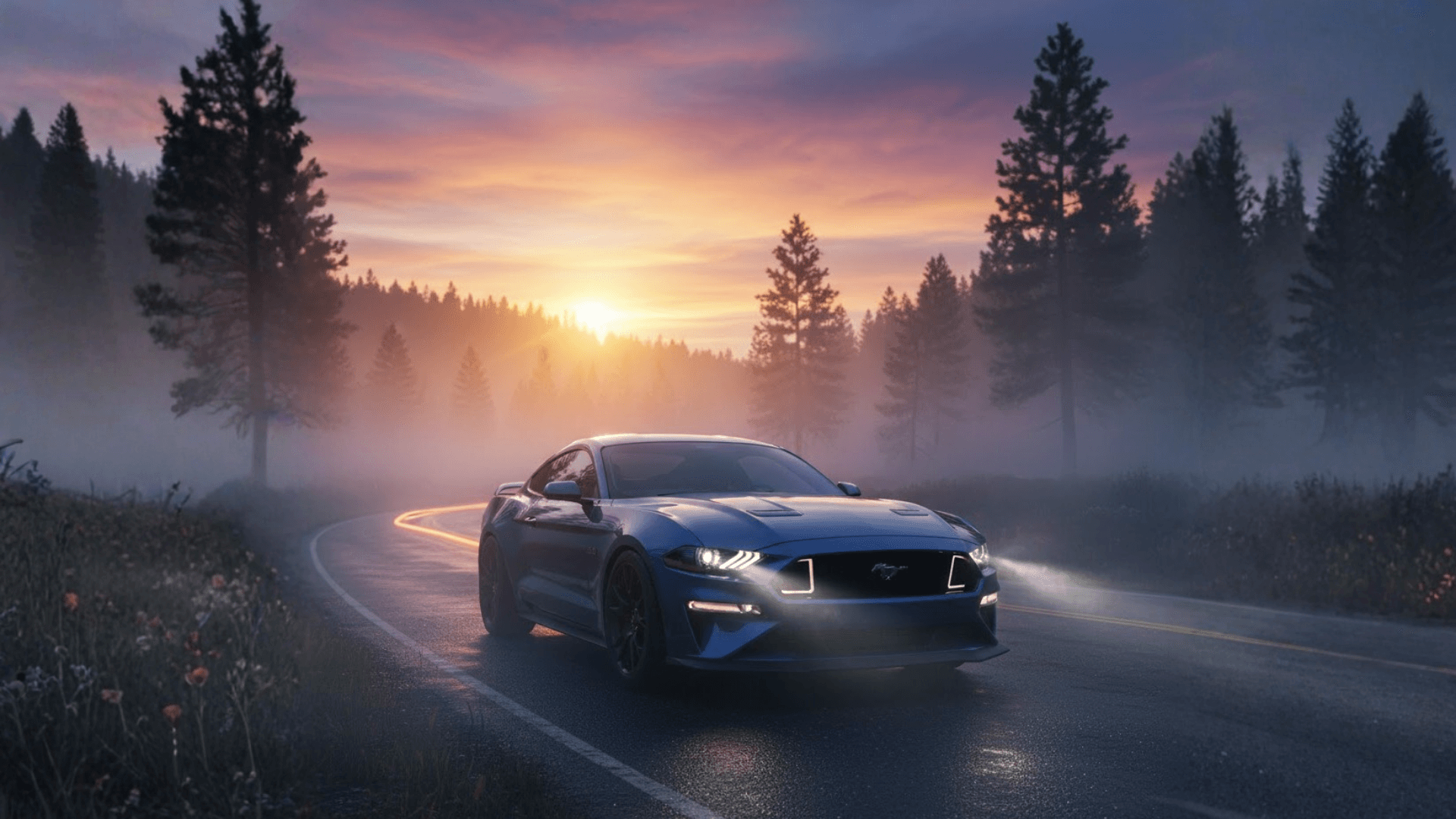
7. The Seventh Generation (2024–Present): The Digital Muscle Era
The latest S650 Mustang preserves everything enthusiasts love while embracing the digital age. The cabin is dominated by a curved display powered by Unreal Engine, offering real-time data, customisation, and an immersive cockpit experience.
Under the bonnet, the fourth-generation Coyote V8 delivers up to 500 horsepower in the new Dark Horse, complemented by a TREMEC six-speed manual gearbox and advanced aerodynamics.
Ford has integrated new technologies such as electronic drift assist, track telemetry, and configurable drive modes to ensure that performance remains exciting but controllable.
Engineering Highlights:
- Dual-screen digital cockpit with customisable visuals
- Gen-4 Coyote V8 with twin throttle bodies
- Enhanced aerodynamics and cooling for track use
Why It Mattered:
The S650 shows that the Mustang can evolve without losing its identity. It blends mechanical engagement with modern intelligence.
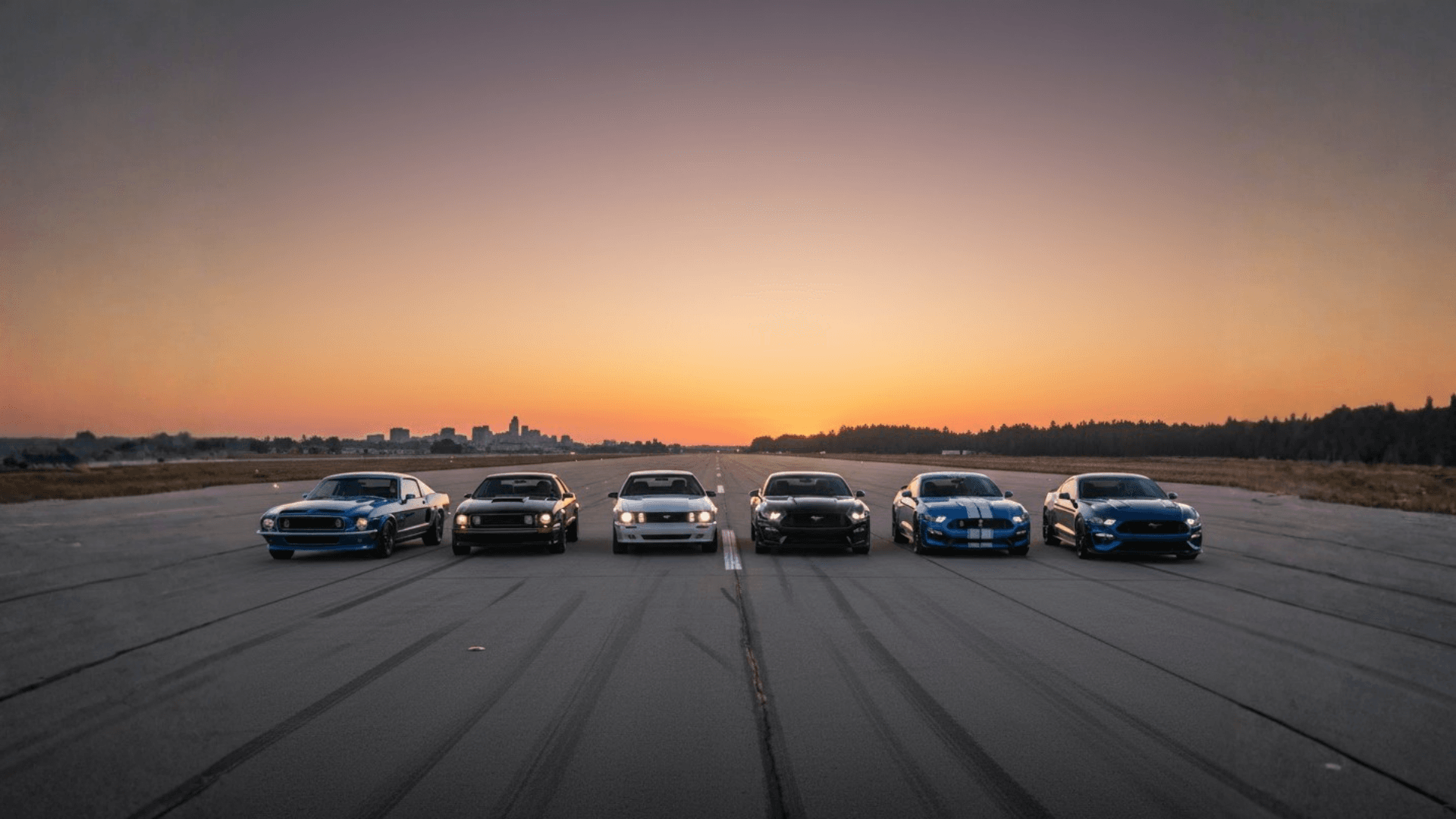
8. Icons That Defined Generations
Throughout its history, the Mustang has produced models that transcended eras and became benchmarks in performance and design.
- 1965 Shelby GT350: Race-bred precision and timeless appeal.
- 1969 Boss 429: A factory-built racing powerhouse.
- 1987 Mustang GT 5.0: The car that revived accessible performance.
- 2003 Cobra Terminator: Supercharged might with everyday usability.
- 2012 Boss 302: A perfect blend of heritage and handling.
- 2020 GT500: A 760-horsepower showcase of modern muscle.
- 2024 Dark Horse: The new face of digital-era performance.
9. Legacy of a Living Legend
The Ford Mustang is more than a car; it is a cultural symbol. It has endured through economic recessions, oil crises, and regulatory shifts while maintaining its core values of freedom and performance.
Every generation tells the same story in a different way. From carbureted V8s and manual steering to adaptive dampers and digital dashboards, the Mustang continues to represent connection between driver and machine.
The world around it has changed, yet the Mustang’s purpose remains the same: to deliver an emotional, unfiltered driving experience. It stands as proof that tradition and innovation can coexist without compromise.